
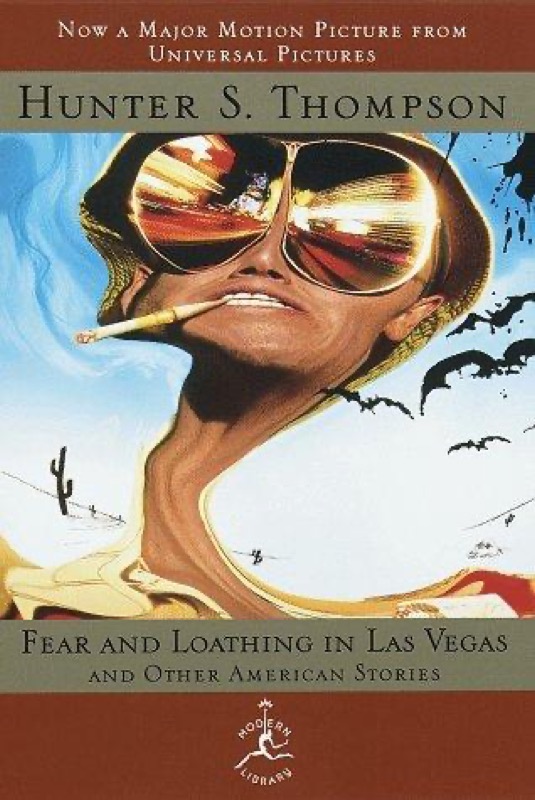
Fear and Loathing in Las Vegas and Other American Stories (Modern Library)
A psychedelic journey through the American Dream.
Hook & thesis
Hunter S. Thompson’s Fear and Loathing in Las Vegas and Other American Stories serves as a frenetic exploration of the collapse of the American Dream through the lens of substance-fueled madness. Verdict: This work brilliantly saturates its chaotic prose with dark humor, revealing the profound despair lurking beneath the counterculture exuberance.
The contextual pivot
Occupying a unique niche within the dark-thriller genre, Thompson’s style is an audacious blend of journalism and fiction, often referred to as Gonzo journalism. This collection not only dissects the malaise of 1970s America but also bridges the gap between niche subcultures and broader literary audiences. In contrast to contemporaries like Norman Mailer or Tom Wolfe, Thompson’s unorthodox narrative and visceral detail present a raw, unfiltered view of a society teetering on the brink of self-destruction, appealing to both devotees of literary experimentation and casual readers seeking a thrill.
Deep-dive critique
Thompson’s prose is characteristically chaotic, employing a first-person narrative that immerses the reader in a hallucinatory experience. The structure is disjointed, mirroring the protagonist’s deteriorating mental state, yet this fragmentation serves the thesis of disillusionment effectively. The pacing fluctuates between frenetic action and reflective pauses, allowing moments of clarity amid the chaos, such as the poignant observations on consumerism and alienation. However, while the vivid imagery and biting dialogue create an engaging world, the reliance on substance abuse as a plot device can feel clichéd and overshadows deeper thematic exploration. The ending, while emblematic of the book’s overarching themes, may leave some readers craving a more resolved conclusion, as it embraces ambiguity rather than closure.
Discussion launchpad
Thompson’s work polarizes readers with its unabashed celebration of excess and critique of the American Dream. Such dichotomies invite rich discussion about the boundaries of satire and realism in literature.
Questions for the room:
- Does Thompson’s relentless pursuit of chaos ultimately serve or sabotage his critique of American society?
- How do the themes of substance abuse and mental health shape our understanding of the characters’ journeys?
- In what ways does the book’s structure enhance or detract from its central message?
- Can the chaotic narrative be seen as a form of authenticity, or does it risk alienating the reader?
- How does Thompson’s portrayal of the American Dream resonate with contemporary societal issues?
#LiteraryAnalysis #darkthriller #Americanliterature #counterculture #theorchidroom