
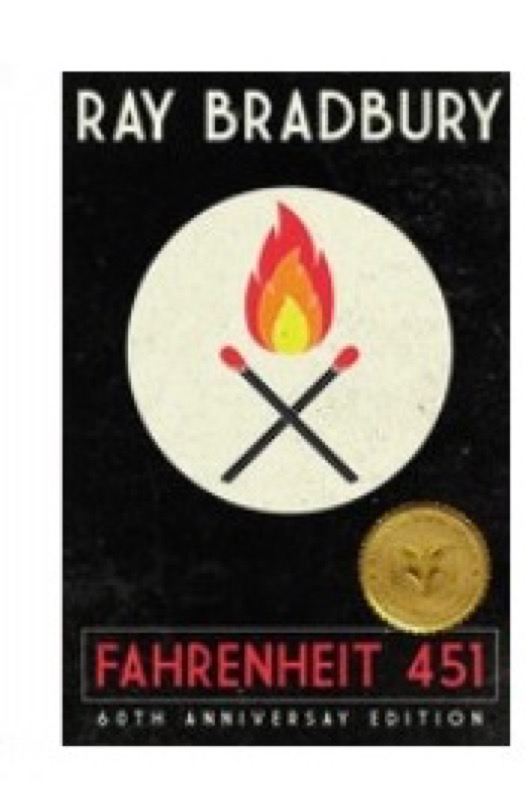
Fahrenheit 451
Hook & thesis
Ray Bradbury’s Fahrenheit 451 presents a chilling exploration of censorship and the loss of individuality in a dystopian future. Verdict: The novel serves as a powerful warning about the dangers of conformism and the suppression of dissenting ideas, compelling readers to reflect on the value of free thought.
The contextual pivot
As a seminal work in the dystopian genre, Fahrenheit 451 stands alongside George Orwell’s 1984 and Aldous Huxley’s Brave New World, reflecting societal anxieties about technology and control. Bradbury’s narrative captures a moment in history when fears surrounding censorship and media influence intensified, making it relevant not only to its contemporary audience but also to future generations. The book navigates between niche literary tropes and broader societal concerns, appealing to both literary enthusiasts and general readers who grapple with the implications of censorship in their own lives.
Deep-dive critique
Bradbury employs a nonlinear narrative structure that enhances the urgency and disorientation experienced by protagonist Guy Montag as he navigates a society that restricts thought. The pacing is deliberately frenetic, mirroring Montag’s internal conflict and growing awareness. Prose choices, such as vivid imagery and metaphorical language, illuminate the stark contrasts between the oppressive society and the beauty of literature. For instance, Montag’s transformation from a fireman, tasked with destroying books, to a seeker of knowledge is reinforced through powerful symbols, such as the fire that consumes and the books that represent freedom. However, the dialogue can occasionally feel stilted, failing to fully capture the emotional depth of characters, which may detract from the overall impact. The ending, while thematically resonant, leaves some readers questioning the feasibility of hope in a seemingly bleak world, raising discussions about the nature of resistance and survival.
Discussion launchpad
Fahrenheit 451 elicits strong opinions about its themes of censorship and individuality.
- How effective is Bradbury’s portrayal of censorship in today’s context?
- Is Montag’s journey a realistic representation of personal rebellion?
- What are the implications of technology in our lives today, as reflected in the novel?
- Can the ending be seen as hopeful or fatalistic?
Questions for the room:
- How do you interpret the role of fire in the novel?
- In what ways does Fahrenheit 451 challenge or reinforce your views on censorship?
- Do you think Bradbury’s warnings are still relevant today?
- How does the world of Fahrenheit 451 compare to present-day society?
#LitClass #Grade11 #RequiredReading #Fahrenheit451 #DystopianLiterature