
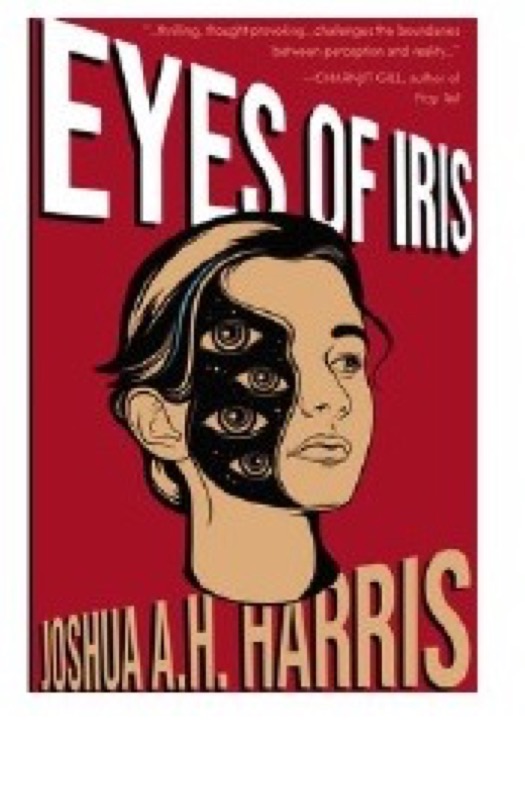
Eyes of Iris
Hook & thesis
“Eyes of Iris” by Joshua A.H. Harris plunges readers into a labyrinthine psychological horror where the boundaries between reality and perception dissolve. At its core, the book wrestles with the fragility of the human psyche when confronted with trauma and obsession. Verdict: This novel excels in its atmospheric tension but falters in character development, leaving readers with an unsettling experience that is both gripping and frustrating.
The contextual pivot
As a dark-thriller, “Eyes of Iris” occupies a unique position within a genre often dominated by straightforward narratives of fear and suspense. Harris’s work draws on elements reminiscent of authors like Shirley Jackson and Thomas Harris, intertwining psychological intricacies with surreal imagery. It hints at broader themes of identity and trauma, appealing to both niche audiences who relish psychological depth and general readers attracted to the thriller format. However, its reliance on genre conventions might alienate those seeking more conventional resolutions.
Deep-dive critique
Harris employs a fragmented structure, mirroring the protagonist’s deteriorating mental state. The nonlinear timeline enhances the suspense, but at times, it obscures the narrative clarity. The prose is lush, teetering on the brink of lyrical, which effectively heightens the surreal atmosphere. For instance, descriptions of the protagonist’s visions are vivid yet disorienting, evoking a sense of dread that lingers long after the pages are turned. However, this strength in style is counterbalanced by character development that feels superficial; the protagonist often acts more as a vessel for thematic exploration than as a fully realized person. Dialogue, while occasionally sharp, often lapses into exposition, which detracts from the tension. The ending, layered with ambiguity, ultimately feels unearned, leaving the reader grappling with unresolved threads rather than satisfying closure.
Discussion launchpad
Harris’s novel raises questions about the nature of reality and the psyche’s response to trauma, elements that may polarize readers. Some may appreciate the open-endedness and psychological depth, while others might find the lack of closure frustrating.
- Questions for the room:
- How does the fragmented structure enhance or detract from your reading experience?
- In what ways does the book challenge or conform to traditional dark-thriller tropes?
- Do you find the protagonist’s journey relatable, or does the lack of depth hinder emotional engagement?
- How does Harris’s use of surreal imagery impact your understanding of the narrative?
- What are your thoughts on the ending — does ambiguity serve the story, or does it leave too many questions unanswered?
#LiteraryAnalysis #darkthriller #romanticsuspense #psychological #darkheartlabs