
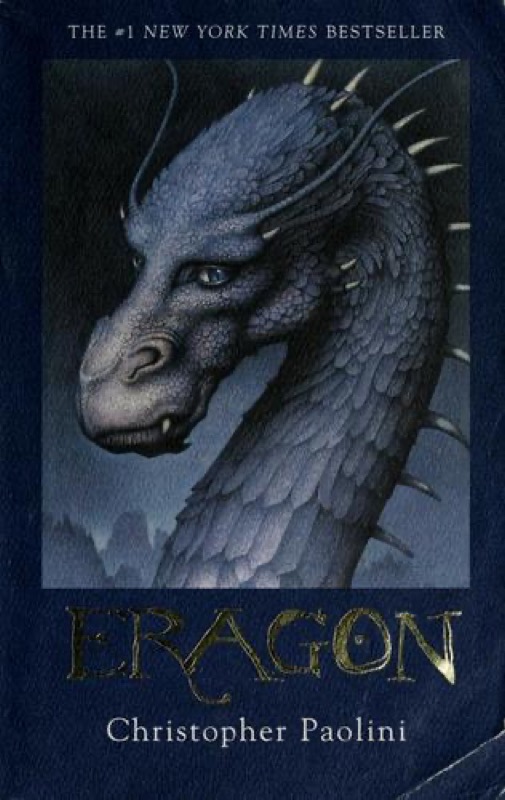
Eragon (The Inheritance Cycle #1)
The Inheritance Cycle #1
Hook & thesis
In Eragon, Christopher Paolini crafts a sweeping fantasy that intertwines the threads of destiny, rebellion, and the bittersweet pangs of first love. Verdict: The book functions as both a gripping initiation into a rich world and a reflection on the burdens of choice and sacrifice.
The contextual pivot
Eragon occupies a revered position in the fantasy genre, marking the emergence of a young adult narrative that appeals to both teens and adults alike. It undeniably draws comparisons to the works of Tolkien and McCaffrey, with its dragons and journeys echoing high fantasy traditions. However, Paolini’s approach, notably his youthful voice and earnest prose, lends it a unique charm that speaks directly to a generation seeking relatable heroes rather than distant kings. The invisible audience here is composed of imaginative youths yearning for adventure and belonging, and Paolini bridges the niche of classic fantasy with accessible, coming-of-age themes.
Deep-dive critique
The strength of Eragon lies in its structural choices and thematic ambitions. Paolini employs a third-person limited perspective, primarily focusing on Eragon’s internal conflicts. This choice limits our view, yet it deepens the reader’s connection to Eragon’s journey, enhancing the emotional stakes of his evolution from a humble farm boy to a dragon rider. The pacing, however, occasionally falters; certain passages linger too long on exposition, which can disrupt the momentum and dilute tension. For instance, the early chapters, filled with rich world-building, might enthrall some, but they risk alienating readers seeking swift action.
Characterization is another cornerstone of Paolini’s craft. Eragon’s naivety juxtaposed with the wisdom of his mentor, Brom, creates a compelling dynamic that explores themes of trust and betrayal. The dialogue often shines, particularly in moments of camaraderie or tension, revealing the characters’ personalities vividly. Yet, some characters can feel archetypal—there’s a fine line between homage and cliché in fantasy, and certain figures tread precariously close to the latter.
Thematically, Eragon succeeds in exploring the weight of destiny versus free will. The dragon, Saphira, embodies the struggles of balancing power with responsibility, echoing the age-old trope of the hero’s journey. The ending, while climactic, feels somewhat formulaic, raising questions about whether it truly earns its resolution or simply fulfills genre expectations.
Discussion launchpad
Eragon presents a fertile ground for debate, particularly in its execution of classic tropes and the balance between originality and homage.
Questions for the room:
- Does Paolini’s adherence to genre conventions enhance or detract from the narrative?
- How does the portrayal of mentorship shape our understanding of the protagonist’s growth?
- In what ways does the relationship between Eragon and Saphira challenge traditional notions of power in fantasy?
- To what extent does the pacing impact the reader’s engagement with the broader themes of destiny and choice?
- Are the character archetypes a strength or a weakness in the overall narrative arc?
#TheOrchidRoom #fantasyromance #darkromance #dragons #coming-of-age