
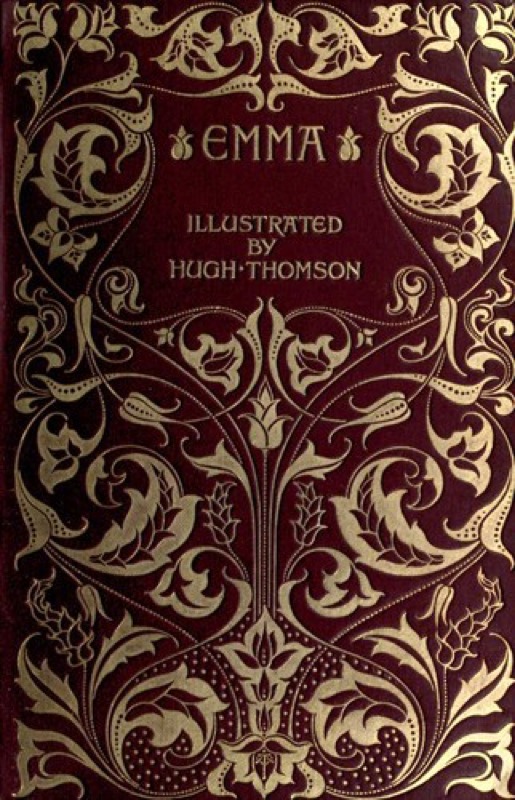
Emma
Hook & thesis
In Jane Austen’s “Emma,” the subtle interplay of societal expectations and personal desires reveals the intricate dance of misjudgments and self-discovery. Verdict: Austen masterfully unravels the complexities of love and friendship, exposing how our perceptions can blind us to the genuine connections that lie beneath the surface.
The contextual pivot
Set within the confines of the Regency era, “Emma” navigates the social hierarchies of its time, exploring themes of class, ambition, and the tumultuous nature of romantic entanglements. Unlike Austen’s earlier works, which often focus on the societal constraints on women through a more direct lens, this novel illuminates the protagonist’s journey from misguided matchmaking to self-realization. The invisible audience here spans both Austen aficionados familiar with her nuanced comedic style and contemporary readers intrigued by the enemies-to-lovers trope, allowing the narrative’s charm to resonate across generational lines.
Deep-dive critique
Austen’s craft in “Emma” is both subtle and sophisticated, utilizing a third-person omniscient narrator that offers insights into the complexities of its characters, particularly the titular Emma Woodhouse. The pacing of the novel ebbs and flows, reflecting the protagonist’s internal conflicts and the social machinations of Highbury. The dialogue sparkles with wit yet serves as a vehicle for deeper commentary on the human condition, revealing characters’ true motivations masked by societal niceties. The novel’s structure, with its layered misunderstandings and gradual unfolding of Emma’s self-awareness, is a testament to Austen’s ability to weave multiple threads into a cohesive narrative tapestry.
However, the novel is not without its mechanical flaws; some may argue that the pacing occasionally lags, risking disengagement as social interactions overlap without immediate consequence. Additionally, while the ending offers resolution, it may feel too neatly tied for those seeking more profound complexity in character arcs. Still, the emotional authenticity achieved through Emma’s growth—culminating in her recognition of love’s true nature—profoundly elevates the narrative, earning its resolution through a deeply felt journey rather than mere happenstance.
Discussion launchpad
Austen’s exploration of misjudgment and the evolution of affection raises several polarizing elements that invite rich discussion.
- How does the social commentary in “Emma” hold relevance in today’s context of relationships and societal expectations?
- Can Emma’s character be seen as a feminist icon, or does she reinforce traditional gender roles?
- Does the book’s resolution feel earned or overly simplistic given Emma’s earlier missteps?
Questions for the room:
- What moments in the novel highlight the tension between societal expectation and personal desire?
- How does Austen’s use of irony shape our understanding of the characters’ motivations?
- In what ways does Emma’s journey resonate with contemporary narratives in romance?
#TheOrchidRoom #enemiestolovers #darkromance #classic #socialcommentary