
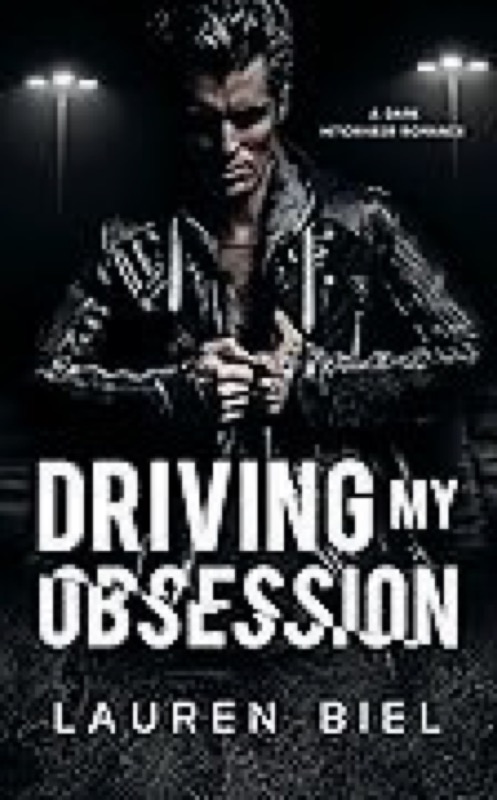
Driving My Obsession
A Dark Hitchhiker Romance
Hook & thesis
In Driving My Obsession, Lauren Biel plunges into the murky depths of desire, where the lines between love and madness blur into a compellingly dangerous dance. Verdict: This novel masterfully explores how obsession can masquerade as affection, ultimately revealing the dark undercurrents of human connection.
The contextual pivot
Positioned firmly within the stalker-obsession subgenre, Biel’s work both embraces and interrogates familiar tropes, evoking comparisons to authors like Tarryn Fisher and Anna Todd, who similarly dissect the darker shades of love. Biel’s narrative takes the reader on a gritty road trip that serves as an allegory for the tumultuous journey of obsession, speaking to an audience that thrives on edge-of-the-seat thrillers yet yearns for character exploration that transcends mere plot mechanics. In this landscape, Biel bridges niche obsessions with a broader readership, allowing for a visceral experience that lingers long after the final page.
Deep-dive critique
Biel’s prose is a blend of stark clarity and emotive depth, effectively capturing the chaotic psyche of her protagonist while simultaneously constructing a chilling atmosphere. The pacing is deliberate, often allowing tension to simmer just beneath the surface, reflecting the unnerving nature of the protagonist’s fixation. The choice of a close third-person perspective immerses us in the internal conflict, creating an intimate connection that is as enticing as it is unsettling.
The dialogue, at times raw and unfiltered, further enhances the narrative’s intensity, often punctuating moments with the urgency of unsaid truths. However, the structure could be perceived as erratic; the nonlinear timeline occasionally disorients, leaving readers grasping at the threads of a plot that demands clarity. Yet, this choice may very well serve the thesis — mirroring the protagonist’s spiraling obsession that defies conventional logic.
In terms of thematic depth, Biel’s exploration of control and vulnerability resonates powerfully. The unsettling nature of ‘dubcon’ and abduction themes invites readers to confront their own boundaries regarding desire and consent. The ending, while provocative, leaves a lingering question of whether redemption or darkness truly prevails. It is both earned and disquieting, reflecting the complexity of human desires that often elude tidy resolutions.
Discussion launchpad
The novel’s grappling with obsession raises polarizing questions about the nature of love and the morality of desire. What does it mean when affection crosses into obsession, and how do we interpret the fine line that separates them?
Questions for the room:
- How does Biel’s portrayal of obsession challenge or reinforce societal perceptions of love?
- In what ways does the narrative structure enhance or hinder our understanding of the protagonist’s psyche?
- What role does setting play in amplifying the themes of control and vulnerability?
- How do we reconcile the darker aspects of romance depicted in the book with personal experiences of love?
#TheOrchidRoom #DrivingMyObsession #DarkRomance #StalkerFiction #LiteraryAnalysis