
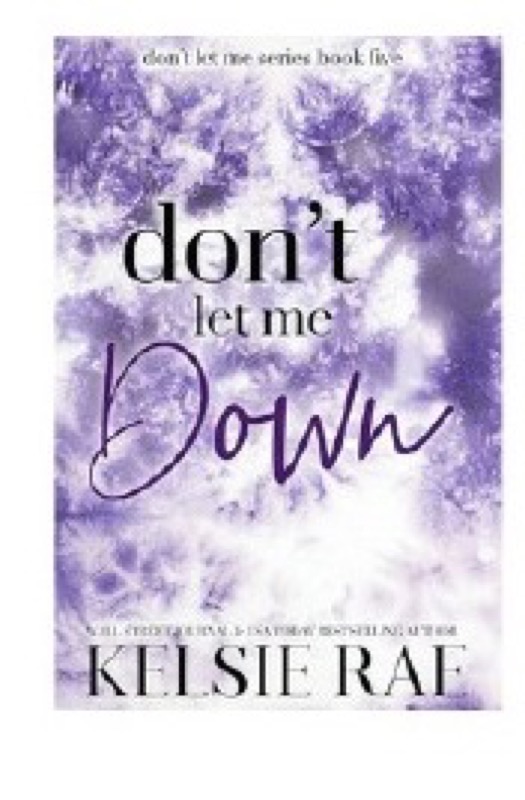
Don't Let Me Down
Don't Let Me Series — Book Five
Hook & thesis
In Don’t Let Me Down, Kelsie Rae deftly navigates the precarious waters of forbidden love, exploring the anguished intersection of desire and loyalty. Verdict: This novel pulsates with an emotional intensity that captures the essence of longing and moral conflict, showcasing Rae’s ability to craft a narrative that is as compelling as it is tumultuous.
The contextual pivot
Positioned firmly within the forbidden love subgenre, Rae’s work draws upon the time-honored trope of the brother’s best friend, yet she diverges from typical romantic conventions by infusing the narrative with layers of emotional complexity. This installment in the Don’t Let Me series serves both devoted fans and new readers, merging niche themes of moral ambiguity and heartache with broader appeals, such as the exploration of grief and emotional distress. Rae’s oeuvre often grapples with the darker facets of romance, and this latest entry is no exception, pushing the reader to confront the ethical dilemmas entwined with desire.
Deep-dive critique
The novel’s structure is particularly noteworthy, employing a dual perspective that oscillates between the protagonists, which allows Rae to skillfully illuminate their internal struggles. This choice enhances the reader’s understanding of the conflicting loyalties and desires at play, creating a palpable tension that underpins the narrative. The pacing, while occasionally meandering, ultimately serves to heighten the emotional stakes, particularly as the characters confront their own vulnerabilities against the backdrop of familial bonds.
Rae’s prose is evocative, with a lyrical quality that complements the gothic undertones of the romance. Descriptions of settings and emotions resonate deeply, enveloping readers in a world where every glance and whisper carries the weight of unspoken yearnings. However, there are moments where the dialogue falters under the weight of exposition, occasionally detracting from the characters’ authenticity. Still, the emotional climaxes are well-earned, particularly in relation to the central theme of grief, which is woven seamlessly into the fabric of desire.
Discussion launchpad
The interplay between familial loyalty and romantic desire creates fertile ground for debate. Readers may grapple with their own interpretations of right and wrong as they analyze the characters’ choices and ethical dilemmas.
Questions for the room:
- Does the portrayal of the brother’s best friend trope empower or diminish the female protagonist?
- How do the themes of grief and emotional distress enhance or overshadow the romantic elements?
- In what ways does Rae’s portrayal of desire challenge or conform to genre expectations?
- Are the characters’ dilemmas relatable, or do they fall into exaggerated melodrama?
- How does the dual perspective shape your understanding of the characters’ motivations?
#TheOrchidRoom #forbiddenlove #darkromance #brothersbestfriend #literaryanalysis