
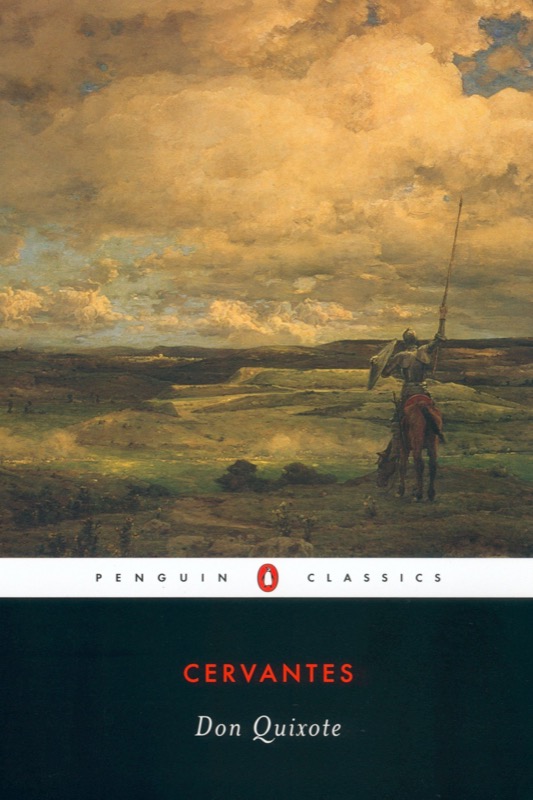
Don Quixote
Hook & thesis
“Don Quixote,” a timeless exploration of idealism versus reality, serves as both a critique of chivalric romance and a profound commentary on human folly. Verdict: Cervantes masterfully dissects the illusion of grandeur inherent in human aspirations, challenging readers to confront the absurdity of their own dreams.
The contextual pivot
As a cornerstone of the Western literary canon, “Don Quixote” occupies a unique space within the genre of picaresque novels, transcending the traditional boundaries of narrative form. Cervantes deftly combines humor with profound philosophical inquiry, bridging the gap between niche literary tropes and broader societal critiques. Unlike contemporaries such as Rabelais or later authors like Dickens, Cervantes crafts an invisible audience that is both reflective and self-aware, inviting readers from all walks of life to engage in the absurdity of existence.
Deep-dive critique
Cervantes employs a dual narrative structure that oscillates between Quixote’s delusions and the stark reality surrounding him, creating a dynamic tension that enhances the thematic exploration of sanity versus madness. The pacing, while often leisurely, serves to immerse the reader in Quixote’s imaginative world, reinforcing the tragicomic elements of his quest. Characterization is particularly notable; Quixote’s idealism juxtaposed with Sancho Panza’s grounded practicality provides a compelling dialogue on human nature. The prose, rich in irony, is laden with vivid imagery and clever wordplay, establishing a world that feels both familiar and absurd. However, the episodic structure can lead to moments of narrative disarray, occasionally detracting from the overall coherence of Quixote’s journey. Ultimately, the ending, while bittersweet, is earned through Quixote’s unwavering pursuit of his ideals, leaving readers to grapple with their own perceptions of reality.
Discussion launchpad
Cervantes’ work undeniably raises questions about the nature of aspiration and the human condition, which can polarize interpretations among readers.
- Questions for the room:
- How does Cervantes’ use of humor impact the reader’s understanding of tragedy?
- In what ways does Quixote’s idealism resonate with contemporary societal aspirations?
- Can Quixote’s madness be viewed as a form of enlightenment or merely delusion?
- How do Sancho Panza’s pragmatic views serve to critique or support Quixote’s ideals?
- What does the conclusion say about the pursuit of dreams in a seemingly indifferent world?
#CollegeLit #FreshmanYear #Canon #classic #literaryfiction