
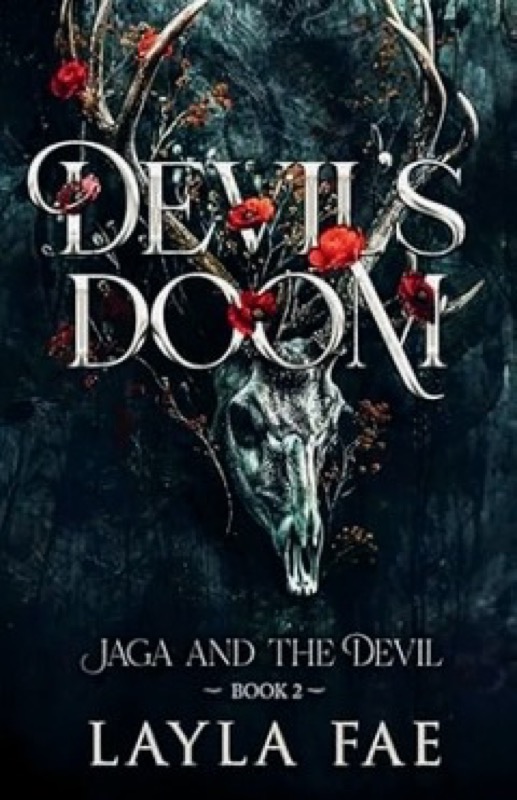
Devil's Doom
Jaga and the Devil — Book 2
Hook & thesis
In Devil’s Doom, Layla Fae plunges readers into a maelstrom of forbidden desire, where love intertwines with the occult, presenting a haunting exploration of morality and choice. Verdict: This book is an intoxicating dance with darkness that magnifies the dangers of surrendering to one’s deepest yearnings.
The contextual pivot
Situated firmly within the forbidden-love genre, Devil’s Doom serves as the second installment in the Jaga and the Devil series, yet it stands on its own with a gripping narrative that encompasses not just romantic tension, but also elements of gothic horror and dark magic. Fae’s work invites comparisons to authors like Sarah J. Maas and Jennifer L. Armentrout, who also delve into the complexities of attraction amidst peril. However, Fae’s distinct voice adds a layer of supernatural tension that sets her apart, appealing to a niche audience that craves both the thrill of romance and the pulse of danger. The book’s ability to bridge niche tropes with broader themes of moral ambiguity and consequence could resonate with general readers seeking depth in their romances.
Deep-dive critique
Fae’s structural choices enhance the book’s thematic depth; the first-person POV immerses readers in the protagonist’s psychological turmoil, allowing for a visceral exploration of attraction and instinct. The pacing fluctuates artfully between breathless encounters and contemplative moments, creating a rhythm that reflects the erratic nature of forbidden desire. Fae’s prose is lyrical, yet incisively sharp, conveying characters’ inner conflicts through vivid imagery and metaphors that evoke both beauty and peril. For instance, the descriptions of dark magic serve not merely as a backdrop but as a potent symbol of the characters’ inner battles between temptation and morality.
However, there are moments where the dialogue feels contrived; the characters sometimes lapse into exposition-heavy exchanges that can dilute the emotional intensity. Additionally, while the ending is compelling, tying together the strands of fate and choice, it occasionally leans into predictability, raising questions about whether the narrative fully honors the stakes it establishes earlier. Nonetheless, the culmination of the protagonist’s journey is largely earned, illuminating the profound consequences of love intertwined with darkness.
Discussion launchpad
Devil’s Doom is rife with polarities that could ignite spirited discourse among readers. The tension between moral integrity and romantic desire raises fundamental questions about the nature of love in perilous contexts.
Questions for the room:
- Does the portrayal of dark magic enhance or overshadow the romance?
- How does Fae’s exploration of forbidden love challenge or reinforce traditional tropes in the genre?
- Are the characters’ choices believable given the supernatural influences at play?
- In what ways does the setting amplify the novel’s emotional stakes?
- How does the ending impact your overall perception of the characters’ journeys?
#TheOrchidRoom #forbiddenlove #darkromance #literaryanalysis #darkheartlabs