
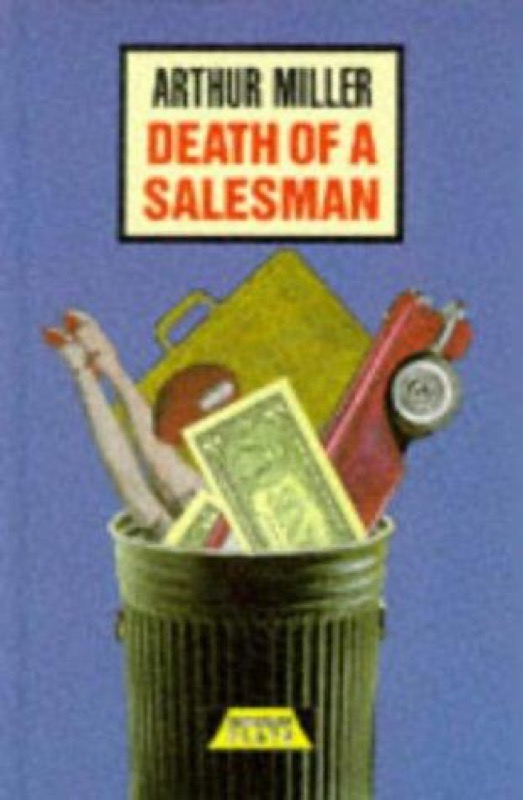
Death of a Salesman
Hook & thesis
Arthur Miller’s Death of a Salesman dissects the American Dream through the tragic figure of Willy Loman, whose pursuit of success leads to emotional and financial ruin. Verdict: This play serves as a poignant critique of societal expectations and personal delusions, revealing that the cost of ambition can be fatal.
The contextual pivot
Death of a Salesman stands as a hallmark of American theatre, positioning itself within the genre of tragedy while simultaneously critiquing the capitalist ethos. It mirrors the existential despair found in the works of contemporaries like Tennessee Williams and Eugene O’Neill, yet Miller’s focus on the everyday man elevates the narrative to a more universal level. The invisible audience includes not only those familiar with the struggles of the working class but also general readers who grapple with their own aspirations. Miller bridges niche themes of personal failure and societal pressure to resonate with a broader audience, making the play a cornerstone of critical discourse in American literature.
Deep-dive critique
The structure of Death of a Salesman, characterized by its non-linear timeline and shifting perspectives, serves to reflect Willy’s fragmented psyche. This technique, while initially disorienting, effectively immerses the audience in Willy’s delusions and memories, enriching the thematic exploration of reality versus illusion. For instance, the use of flashbacks highlights the stark contrast between Willy’s dreams and his stark reality, accentuating his tragic flaws. Miller’s dialogue is sharp and reveals the tensions within the Loman family, particularly through the strained interactions between Willy and his son Biff. The raw honesty in their exchanges underscores the themes of disillusionment and familial dysfunction. However, the pacing occasionally falters, particularly in the second act, where the emotional weight begins to feel repetitive, diluting the impact of Willy’s ultimate fate. Despite this, the ending is earned, as Willy’s tragic decision encapsulates the culmination of his internal struggles and societal pressures.
Discussion launchpad
Miller’s Death of a Salesman raises profound questions about the nature of success and the cost of ambition, polarizing audiences between those who empathize with Willy and those who view him as a cautionary tale.
Questions for the room:
- Is Willy Loman a victim of his circumstances or responsible for his own downfall?
- How does Miller’s portrayal of the American Dream resonate with contemporary society?
- In what ways does the play challenge traditional notions of masculinity?
- Could the ending be interpreted as a form of liberation rather than tragedy?
- How do the supporting characters enhance or detract from Willy’s journey?
#LitClass #Grade11 #RequiredReading #tragedy #AmericanLiterature