
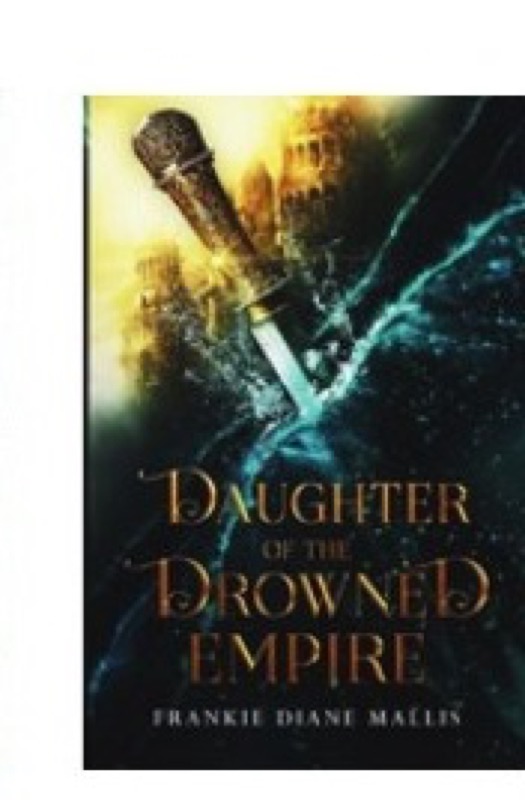
Daughter of the Drowned Empire
Hook & thesis
In Daughter of the Drowned Empire, Frankie Diane Mallis plunges into a world where the currents of political intrigue and forbidden desire intertwine, crafting a narrative that grips the reader’s heart and imagination. Verdict: This book is a haunting exploration of power and sacrifice, elevated by visceral prose that leaves lingering echoes of its emotional weight.
The contextual pivot
Mallis’s work occupies a unique niche within the fantasy-romance genre, weaving elements of dark romance with epic fantasy tropes. While often drawing on the rich traditions of authors like Sarah J. Maas and V.E. Schwab, the novel diverges into a territory that feels both familiar and refreshingly distinct. The intricate world-building and the palpable tension between love and loyalty cater to an audience that relishes the complexities of human emotion set against a fantastical backdrop. This book deftly bridges the gap for readers who may typically shy away from genre conventions, inviting a broader audience into its depths.
Deep-dive critique
The structure of Daughter of the Drowned Empire is meticulously crafted, with a pacing that mirrors the ebb and flow of its aquatic settings. The dual point-of-view narrative not only deepens the emotional resonance but also allows for an exploration of contrasting desires and conflicting loyalties, serving the theme of sacrifice versus ambition. Mallis excels in her prose, employing rich, lyrical language that evokes a sense of place while simultaneously heightening the stakes of desire and betrayal.
Character development is particularly noteworthy; protagonists grapple with their identities amid the chaos of war and political machinations. The dialogue rings true, blending moments of vulnerability with the sharpness of conflict, creating characters that feel both relatable and intensely complex. The thematic exploration of love intertwined with loss and the cost of power resonates throughout the narrative.
However, the complexity of the world-building can occasionally overwhelm the plot, leading to moments where the pacing falters under the weight of exposition. While the ending is dramatically satisfying and thematically earned, some readers may find the resolution teetering on the edge of predictability, especially in a genre rich with tropes. Yet, the emotional stakes remain high, ensuring that the reader feels the full impact of the characters’ journeys.
Discussion launchpad
Mallis’s work presents several polarizing elements that could incite passionate discussion among readers, particularly around the balance of romance and political intrigue. The intertwining of personal and political stakes raises questions about agency and desire in the context of power dynamics.
Questions for the room:
- How does Mallis’s portrayal of political intrigue enhance or detract from the romantic elements of the story?
- In what ways do the characters’ sacrifices reflect broader themes of duty versus desire?
- Does the dual point-of-view enrich the narrative, or does it complicate the emotional connection to the characters?
- How do the content warnings shape your reading experience, and do they impact your perception of the romance?
- Can the predictability of the ending be justified within the novel’s thematic framework?
#TheOrchidRoom #fantasyromance #drownedempire #darkromance #literaryanalysis