
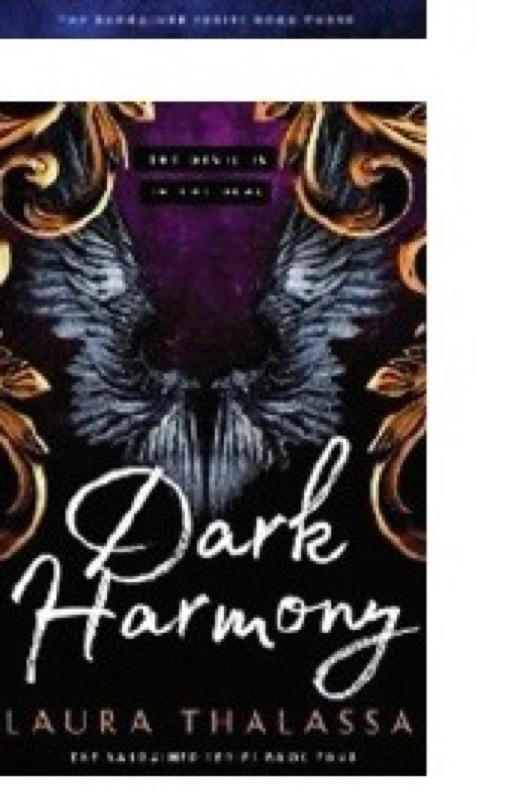
Dark Harmony
The devil is in the deal
Hook & thesis
In Laura Thalassa’s Dark Harmony, the intersection of desire and power unfolds in a world where love is bartered and darkness seeps into every transaction. The author’s primary objective is to explore how the weight of choices can bind or liberate the human soul. Verdict: This novel grapples with the intoxicating pull of obsession, rendering it a captivating yet perilous exploration of the human heart.
The contextual pivot
Dark Harmony positions itself firmly within the fantasy-romance genre, joining a pantheon of works that intertwine elements of magic with the intricacies of romantic entanglement. Thalassa’s narrative echoes the lyrical darkness of authors like Sarah J. Maas and Jennifer L. Armentrout, yet carves its niche by examining the toll of desire in a world governed by dark bargains. Thalassa’s audience appears to be those who appreciate a blend of high-stakes fantasy with the complexities of love, and she successfully bridges the gap between niche tropes and a broader readership by layering her prose with emotional resonance and moral ambiguity.
Deep-dive critique
The structural pacing in Dark Harmony is both a strength and a weakness. Thalassa employs a dual narrative perspective that establishes an immediate tension between characters, yet at times the shifts can disrupt the flow, leading to a disjointed reading experience. The timeline, while rich with lore, occasionally feels overstuffed with exposition, which can detract from the emotional immediacy of the central conflict. However, what Thalassa excels in is her ability to craft vivid world-building that pulses with a sense of impending doom, enhanced by an atmospheric prose style that immerses the reader.
Characterization shines as Thalassa deftly navigates the complexities of her protagonists, portraying them with a blend of vulnerability and strength. The dialogue feels authentic, laden with an undercurrent of tension that mirrors their emotional landscapes. Yet, one could argue that some supporting characters lack depth, serving more as archetypes than fully realized individuals, which could leave readers yearning for richer interactions.
The thematic exploration of choices and their consequences culminates in an ending that feels both earned and hauntingly ambiguous. Thalassa masterfully invites readers to question the morality of her characters’ decisions, leaving lingering discomfort as a testament to the novel’s deeper inquiries into the nature of love and sacrifice.
Discussion launchpad
While Dark Harmony offers a compelling narrative, it also invites polarizing interpretations of its moral landscape. The ethical implications of love intertwined with power dynamics could provoke heated discussions, as readers grapple with whether the ends justify the means in the pursuit of desire.
Questions for the room:
- How do the characters’ choices reflect or challenge societal norms regarding love and power?
- In what ways does Thalassa’s world-building enhance or detract from the emotional stakes of the narrative?
- Can we empathize with characters who make morally ambiguous decisions in the name of love?
- What role does the concept of darkness play in shaping both character development and thematic depth?
- How does Dark Harmony compare to other works in the fantasy-romance genre in its treatment of desire?
#TheOrchidRoom #darkromance #fantasyromance #literaryanalysis #darkheartlabs