
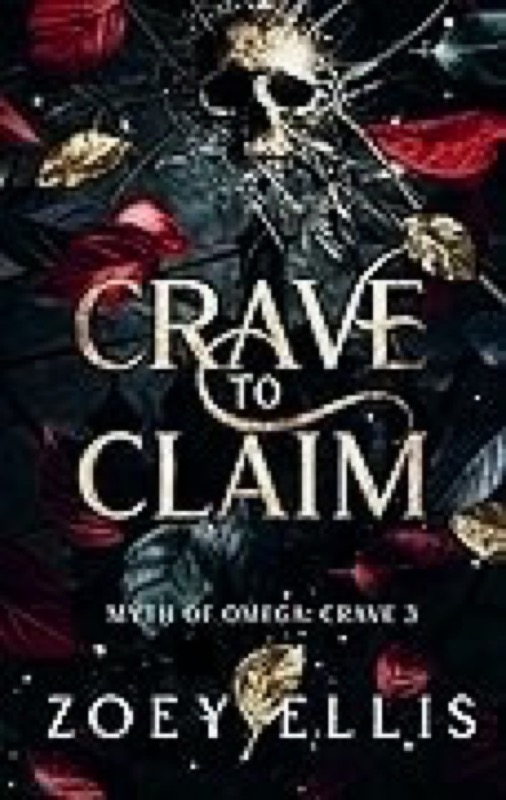
Crave to Claim
Myth of Omega: Crave 3
Hook & thesis
In Crave to Claim, Zoey Ellis deftly navigates the turbulent waters of power and desire within the confines of a captivating captor-and-captive narrative. The book’s true engine lies in its exploration of obsession and the struggle for agency amidst overwhelming desire. Verdict: This novel grips you in a dark embrace, compelling readers to confront the complexities of love entwined with captivity.
The contextual pivot
Positioned within the burgeoning subgenre of omegaverse dynamics, Crave to Claim carves a niche that merges dark romance with fantastical elements, reminiscent of the works of authors like Anne Rice and Sarah J. Maas. Ellis’s infusion of gothic motifs—intense emotional landscapes, forbidden desires, and a labyrinthine world—invites a broader audience while still appealing to those who relish the darker edges of romance. This novel balances niche tropes with a broader appeal, as it addresses themes of captivity and power imbalance, ultimately bridging the gap between genre aficionados and general readers intrigued by the complexity of human relationships.
Deep-dive critique
Ellis employs a nonlinear structure that enhances the emotional weight of the protagonist’s journey, creating a sense of urgency and unease that resonates deeply with the reader. The alternating points of view allow for a layered understanding of desire and possession, yet at times, this structure can disorient, potentially detracting from the urgency of pivotal scenes.
The prose is rich and evocative, deftly painting the internal struggles of the characters. For instance, Ellis’s ability to articulate the tension between the captor’s obsession and the captive’s longing for freedom exemplifies her command over language. Dialogue is laced with subtext, revealing character motivations while simultaneously heightening the stakes of their interactions. However, moments of melodrama occasionally threaten to overshadow the subtler nuances of character development, risking reader immersion at critical junctures.
The thematic exploration of power dynamics is where Crave to Claim truly excels. Ellis does not shy away from the moral ambiguities inherent in her characters’ relationships, challenging readers to wrestle with the ethics of desire and the implications of obsession. The ending, a culmination of tension woven throughout the narrative, feels both inevitable and earned, leaving readers to grapple with the lingering questions of love and autonomy.
Discussion launchpad
Crave to Claim offers a rich tapestry of themes that can ignite heated discussions among readers. The polarities between obsession and love, freedom and captivity, create fertile ground for debate.
Questions for the room:
- What are the implications of portraying power imbalance in romance? Does it romanticize unhealthy relationships?
- How does the nonlinear structure affect your experience of the characters’ emotional arcs?
- Can obsession ever be portrayed as a legitimate form of love, or is it purely destructive?
- In what ways does Ellis’s work challenge or conform to typical tropes found in omegaverse narratives?
- How do you interpret the ending in terms of character growth and moral lessons?
#TheOrchidRoom #CraveToClaim #DarkRomance #Omegaverse #LiteraryAnalysis