
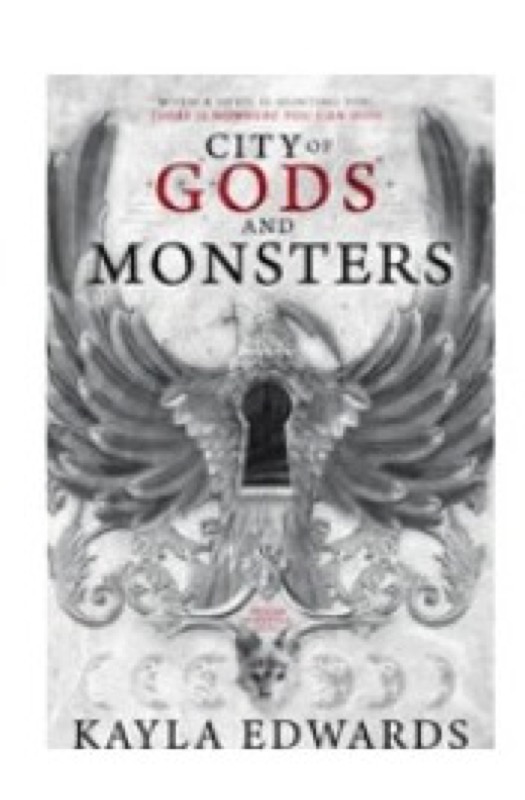
City of Gods and Monsters
When a devil is hunting you, there is nowhere you can hide.
Hook & thesis
In “City of Gods and Monsters,” Kayla Edwards deftly intertwines the threads of dark fantasy and romance, exploring themes of desire, power, and the haunting pull of the past. Verdict: This novel compels readers to confront the seductive nature of danger, leaving a lingering question of how far one would go to escape the shadows of desire.
The contextual pivot
This narrative sits comfortably within the fantasy-romance genre, yet it transcends typical tropes by delving into the psychological depths of its characters. Edwards, known for her ability to blend emotional intensity with lush world-building, provides a bridge between niche romantic fantasy and broader literary themes. Readers of authors like Sarah J. Maas and Holly Black will find familiarity in the dark allure of the narrative, while new audiences are invited to explore the complexities of love intertwined with peril. The invisible audience includes those who seek not just escapism but a raw examination of human emotion amidst fantastical settings.
Deep-dive critique
Edwards employs a non-linear structure that mirrors the protagonist’s tumultuous journey, creating an intricate tapestry of past and present that enhances the emotional depth. The choice of a close third-person POV allows readers to inhabit the protagonist’s psyche, feeling her fears and desires as if they were their own. This intimacy is both a strength and a potential pitfall; at times, the emotional intensity can overwhelm the narrative, risking reader fatigue. However, moments of stark, poetic prose punctuate the story, illuminating the characters’ internal conflicts and elevating the text beyond mere genre fare.
Character development is a standout element, with layered personalities motivated by complex backstories. The relationship dynamics are fraught with tension, expertly crafted through dialogue that crackles with unspoken yearning and fear. Edwards’s world-building immerses readers in a vividly imagined city, where the gods and monsters are not just external threats but reflections of the characters’ inner demons.
However, the pacing falters in certain sections, as the buildup to climactic points can feel stretched, leaving the resolution feeling somewhat rushed. The ending, while thematically resonant, may polarize readers; it raises questions about redemption and sacrifice that linger long after the final page.
Discussion launchpad
The novel’s exploration of the intertwining of love and danger presents rich ground for debate, particularly regarding the morality of the characters’ choices and the impact of their pasts on their present.
Questions for the room:
- How do the themes of power and desire manifest in the characters’ relationships?
- Does the non-linear narrative enhance or detract from the emotional experience?
- In what ways does the ending challenge or conform to genre expectations?
- Can the portrayal of emotional intensity be seen as a double-edged sword?
- What biases do we bring to the interpretation of love intertwined with danger in fantasy?
#TheOrchidRoom #fantasyromance #darkromance #literaryanalysis #cityofgodsandmonsters