
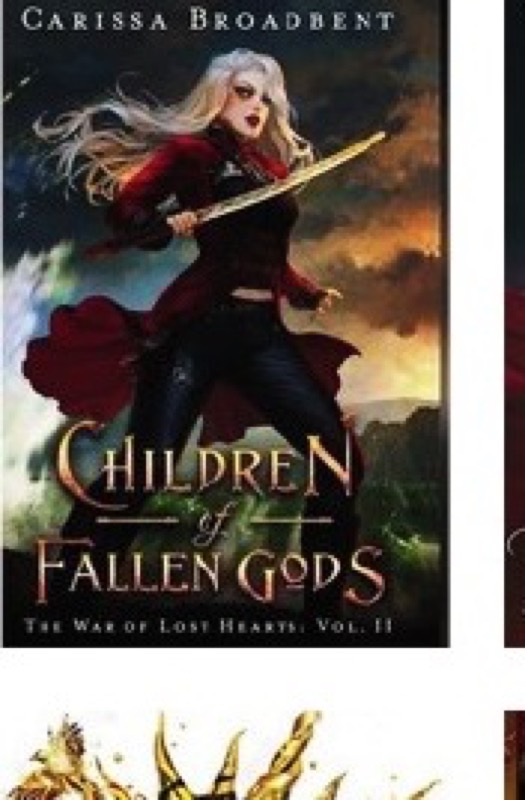
Children of Fallen Gods
The War of Lost Hearts Vol. II
Hook & thesis
In Children of Fallen Gods, Carissa Broadbent explores the tumultuous intersections of love, loyalty, and the haunting weight of legacy within a world ravaged by conflict. Verdict: This book masterfully entwines the intricacies of human desire with the stark realities of a fantastical war, revealing that the true battleground lies within the heart.
The contextual pivot
As the second installment in the War of Lost Hearts series, Broadbent’s work sits at the crossroads of fantasy and romance, resonating deeply with readers familiar with authors like Sarah J. Maas and Jennifer L. Armentrout. However, unlike some contemporaries who lean heavily into escapism, Broadbent’s narrative is steeped in a gothic undercurrent that emphasizes the ravages of war and the human condition. Her invisible audience is likely those who crave a darker, more complex exploration of romance within fantasy — a niche that she adeptly bridges to appeal to a broader readership.
Deep-dive critique
The structure of Children of Fallen Gods is a labyrinthine tapestry woven through alternating perspectives that deepen the emotional stakes and reveal the psychological ramifications of war. Broadbent’s pacing is deliberate, allowing readers to linger on moments of tension and intimacy that pulse throughout the narrative. The dialogue is sharp, often laced with layered subtext that speaks to unfulfilled desires and buried traumas, effectively illustrating the characters’ internal struggles.
Characterization is another stronghold of Broadbent’s craft. The protagonists are not merely star-crossed lovers; they are individuals marked by their pasts, navigating a treacherous landscape of grief and hope. This depth lends a palpable weight to their decisions, turning the narrative into a reckoning of their intertwined fates. However, the thematic exploration of “fallen gods” could have been better grounded in the world-building; at times, the mythos feels overshadowed by the personal stories, leading to occasional dissonance in thematic unity. The ending, while climactic, leaves certain plot threads tantalizingly unresolved, echoing the perpetual cycle of war and leaving readers with a haunting sense of longing.
Discussion launchpad
Broadbent’s exploration of love amidst turmoil invites reflection on the nature of desire in contexts of conflict. The interplay of light and shadow in the narrative raises questions about the costs of passion and loyalty.
Questions for the room:
- How do you interpret the balance between romantic desire and the harsh realities of war in the story?
- In what ways do the characters’ traumas shape their relationships and decisions?
- Does the unresolved ending enrich the narrative or detract from the reader’s experience?
- What role does the fantasy setting play in amplifying the emotional stakes of the characters’ struggles?
- How effectively does Broadbent blend the tropes of fantasy and romance, and what does that say about genre expectations?
#TheOrchidRoom #fantasyromance #darkromance #literaryanalysis #waroflosthearts