
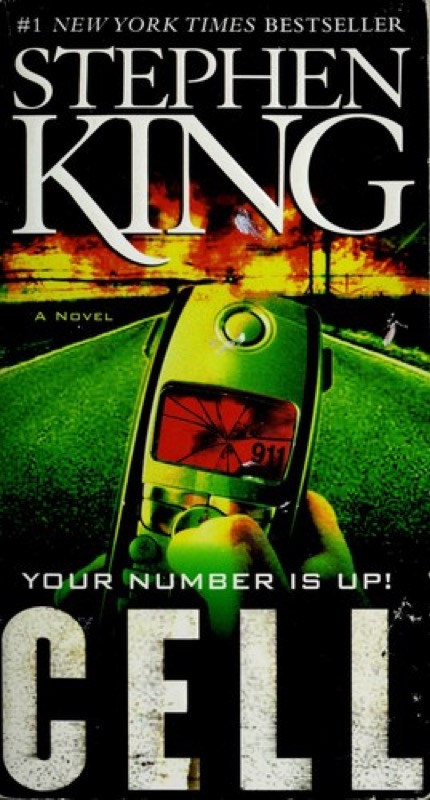
Cell
Hook & thesis
Stephen King’s Cell weaves a harrowing narrative of societal collapse, examining the fragility of human connection in the face of a technological apocalypse. Verdict: This chilling exploration of humanity’s darkest impulses reveals that the true horror lies not in the monsters but in the men who become them.
The contextual pivot
Positioned within King’s broader oeuvre, Cell stands as a visceral meditation on the consequences of technology on human behavior, akin to the themes explored in his earlier works like The Stand and The Mist. This dark-thriller taps into an anxiety that resonates with readers who grapple with contemporary technological dependence, and while it may cater to genre enthusiasts, its chilling premise also reaches out to a general audience anxious about the future.
Deep-dive critique
Structurally, Cell employs a rapid-fire pacing that mirrors the chaos of the narrative’s events, compelling readers to race alongside the characters as society unravels. King’s choice of a third-person omniscient point of view allows for a broad exploration of the collapse, though it sometimes leads to disjointed character development. The cast, while richly conceived, occasionally falters under the weight of the plot, with certain characters feeling more like archetypes than fully realized individuals.
Thematically, the book probes deeply into mental health issues, showcasing how the mind can fracture under duress. The graphic violence and grotesque imagery serve not merely as shock value but as a testament to the dehumanization that occurs when civilization crumbles. King’s prose is sharp and evocative, with moments of stark beauty juxtaposed against the horrific decay of humanity. However, the climax disappointingly veers into familiar territory, leaving the reader with an unsatisfying conclusion that feels unearned, as if King’s urge to find closure overshadows the preceding chaos.
Discussion launchpad
Cell invites debate on the ethics of technology and the human psyche’s vulnerabilities, polarizing readers on its portrayal of societal collapse and moral decay.
- Questions for the room:
- Does King’s depiction of technology’s impact feel prophetic or exaggerated?
- Are the characters’ transformations believable, or do they fall victim to genre clichés?
- How effective is the ending in encapsulating the book’s themes?
- In what ways does Cell challenge or reinforce the concept of survival in a broken world?
- Can the horror of Cell be considered a reflection of modern anxieties about technology?
#LiteraryAnalysis #GothicEdge
#darkthriller #apocalyptic #zombies #theorchidroom