
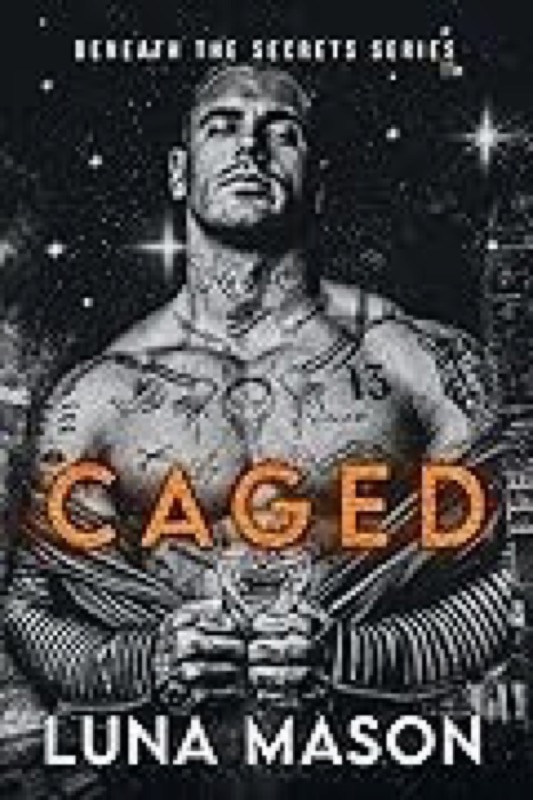
Caged
Beneath the Secrets Series
Hook & thesis
Luna Mason’s Caged dives into the murky waters of captivity and obsession, revealing the thin line between desire and despair. Verdict: This narrative provocatively explores how love can twist into possession, leaving readers to question the very nature of freedom.
The contextual pivot
Situated within the captor-and-captive subgenre, Caged offers a fresh lens on a familiar theme. Mason’s work echoes the psychological intensity found in titles like Comfort Food by Kitty Thomas and The Dark Half by Stephen King, where boundaries blur and human nature reveals its most primal instincts. While the genre often caters to niche audiences drawn to darker romantic tropes, Mason’s prose possesses a lyrical quality that can bridge to a broader readership, inviting even those unfamiliar with darker narratives to ponder the intricacies of twisted affection.
Deep-dive critique
Mason employs a dual narrative structure that oscillates between the perspectives of the captor and the captive, enhancing the psychological depth and emotional stakes of the story. This technique allows the reader to navigate the complexities of their entangled fates, yet it also risks disorienting the audience if not executed with precision. The pacing, particularly in the first half, is deliberately languid, mirroring the claustrophobic tension of captivity, but may frustrate readers seeking immediate gratification.
Characterization shines through Mason’s meticulous detail; the tattooed hero is not merely a trope but a vessel of scars—both physical and emotional—that evoke empathy. The dialogue crackles with a mix of vulnerability and threat, grounding their relationship in a reality that feels both fantastical and painfully relatable. However, some thematic elements, such as the exploration of obsession, tread precariously close to glorification, warranting a careful reading that differentiates between infatuation and genuine connection.
The ending, while impactful, raises questions about agency and consent, the culmination of which feels both earned and unsettling. Mason crafts an atmosphere thick with tension, yet the resolution leaves lingering shadows that could spark debate regarding the characters’ futures and moral implications.
Discussion launchpad
Caged challenges readers to grapple with the duality of love and possession, posing significant questions about the ethics of desire. What is the cost of obsession, and where do we draw the line?
Questions for the room:
- How does the exploration of captivity shape our understanding of the characters’ motivations?
- In what ways does the narrative challenge or support the romanticization of dark relationships?
- Are the characters’ arcs satisfactory, or do they reinforce harmful stereotypes?
- How does the author’s use of language amplify the tension between love and control?
- Where do we see moments of genuine connection that transcend the darker themes?
#TheOrchidRoom #Caged #LunaMason #darkromance #literaryanalysis