
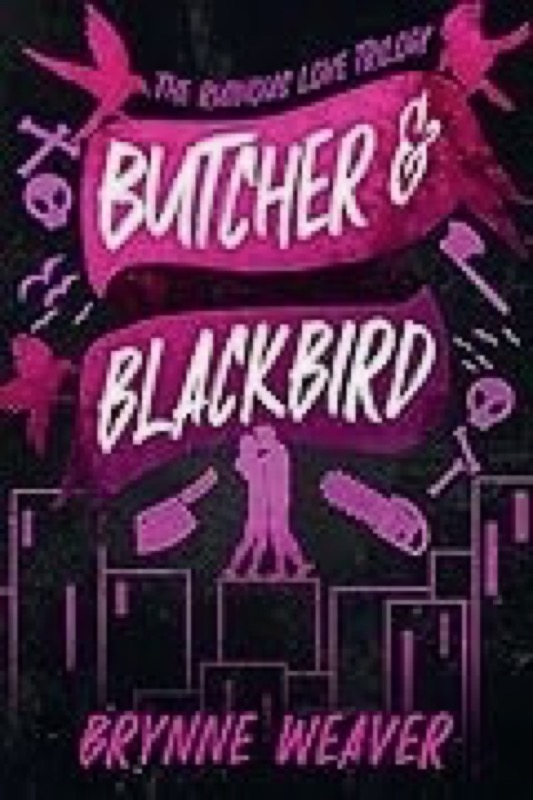
Butcher & Blackbird
The Ruinous Love Trilogy
Hook & thesis
In Brynne Weaver’s Butcher & Blackbird, the visceral dance between love and violence serves as a haunting exploration of obsession and redemption. Verdict: This book compels with its deft intertwining of terror and tenderness, crafting a narrative that both enthralls and unsettles.
The contextual pivot
Positioned in the enemies-to-lovers subgenre, Weaver’s work navigates the murky waters of dark romance with an expertise that recalls the likes of Anna Zaires and Talia Hibbert, yet it dares to tread deeper into the shadows. The narrative is steeped in gothic undertones, resonating with readers who savor a mix of thrill and emotional depth. Weaver’s exploration of ruinous love appeals to a niche audience familiar with the complexities of flawed characters while also inviting general readers to ponder the boundaries of desire and morality, ultimately bridging the divide between traditional romance and psychological suspense.
Deep-dive critique
Weaver’s structural choices play a pivotal role in amplifying the tension inherent to her premise. The alternating perspectives of the protagonists create a palpable push-pull dynamic, immersing readers in their conflicting desires and fears. This duality not only heightens suspense but also deepens the reader’s understanding of the characters’ motivations, providing a rich tapestry of conflicting emotions that resonate with the theme of obsession.
The prose is sharp, often echoing the jagged edges of the characters’ psyches. Weaver employs visceral imagery to depict violent encounters, which serves to reflect the inner turmoil rather than merely glorifying it. This craft choice, while potentially off-putting to some, is essential in crafting a narrative that feels both raw and authentic. However, the pacing occasionally falters, particularly in the mid-section, where the intensity softens, risking a disconnection from the harrowing stakes established earlier.
The thematic exploration of love as a catalyst for both destruction and healing is profound, yet the ending teeters on the edge of expectation. While it provides closure, one might question whether it fully encapsulates the complexity of the journey taken, leaving some emotional threads tantalizingly unresolved.
Discussion launchpad
Butcher & Blackbird offers a fertile ground for debate regarding the fine line between love and obsession, as well as the moral ambiguities surrounding its characters. What might be acceptable in the name of love, and where do we draw the line?
Questions for the room:
- How do the alternating perspectives affect your empathy for the characters?
- In what ways does the depiction of violence serve the romantic narrative, and does it enhance or detract from the story?
- Do you find the resolution satisfying, or does it leave too much ambiguity regarding the protagonists’ futures?
- What are your thoughts on the portrayal of obsession in romantic contexts—can it ever be justified?
- How does Weaver’s writing style influence your engagement with the characters and their tumultuous relationship?
#TheOrchidRoom #enemiestolovers #darkromance #ruinouslove #literaryanalysis