
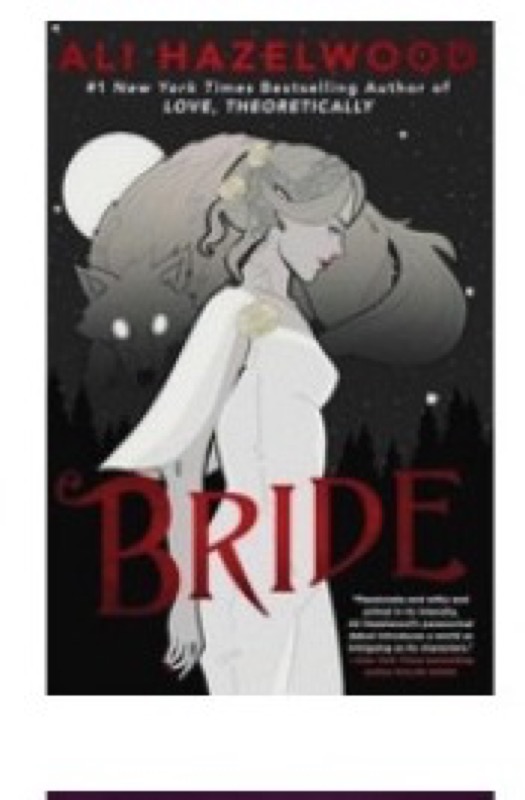
Bride
Hook & thesis
In Bride, Ali Hazelwood crafts a seductive narrative that dances through the shadows of desire, power, and the complexities of an arranged marriage within a vampire-infested world. Verdict: This novel is a potent exploration of the interplay between autonomy and obligation, wrapped in a lush, darkly romantic package that compels the reader to ponder the nature of love under duress.
The contextual pivot
Bride elegantly straddles the line between gothic romance and contemporary paranormal fiction, echoing the atmospheric tension found in authors like Anne Rice and Stephenie Meyer while carving its own niche in a crowded genre. Hazelwood’s work appeals to a diverse audience; she masterfully intertwines niche tropes—vampires and arranged marriages—with broad themes of agency and relational dynamics, inviting both genre enthusiasts and general readers alike into a world where passion and peril coalesce. This balance allows Bride to resonate beyond typical vampire lore, making it a compelling addition to Hazelwood’s growing oeuvre.
Deep-dive critique
The novel’s structure is a dance of tension and release, with pacing that mirrors the protagonist’s emotional arc. The first-person POV immerses readers in the protagonist’s psyche, blending her fears and desires into a single narrative thread that heightens the stakes of her arranged marriage. Hazelwood excels in her prose, using vivid, sensory language to evoke the gothic ambiance—each description of blood and violence is laced with an undercurrent of desire, blurring the lines between love and possession.
Dialogue is sharp and witty, serving not only to develop character but also to elevate the tension inherent in the arranged marriage setup. The characters are well-drawn, each embodying their own conflicts and desires that play against the backdrop of a world steeped in darkness and mystery. However, there are moments where the plot veers into predictability; the climax, while satisfying, feels slightly earned rather than inevitable, leaving a question of whether the emotional payoff aligns with the buildup of conflict.
Furthermore, the thematic exploration of agency is particularly resonant—how one navigates imposed roles without losing their sense of self. This thematic depth is a hallmark of Hazelwood’s craft, although the reliance on certain genre conventions may leave some readers craving more innovation.
Discussion launchpad
The interplay of autonomy and desire in Bride presents rich ground for debate. While Hazelwood’s world-building is immersive, some readers may feel the reliance on established tropes hampers originality.
Questions for the room:
- Does the use of an arranged marriage trope enhance or detract from the exploration of personal agency?
- How does the gothic atmosphere influence your perception of the characters’ relationships?
- Are the violent elements justified within the context of the story, or do they overshadow the romance?
- In what ways does Hazelwood succeed or falter in elevating traditional vampire lore?
- How does the ending reflect the themes of autonomy and choice?
#TheOrchidRoom #Bride #AliHazelwood #darkromance #literaryanalysis