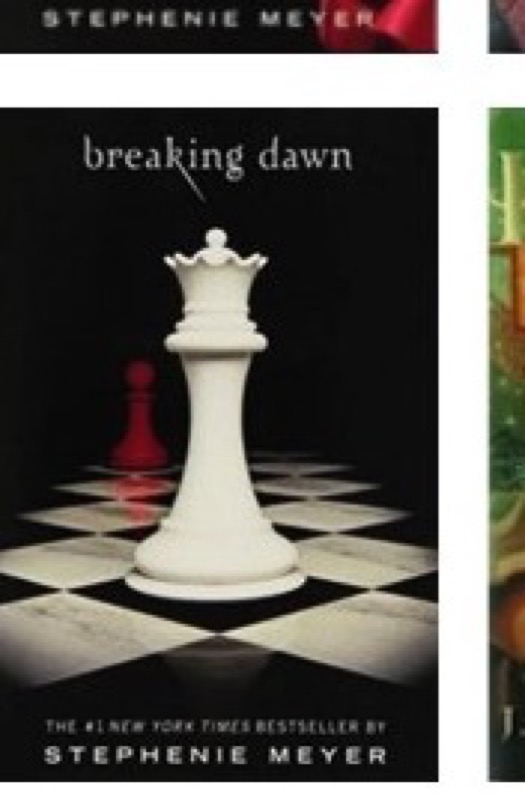
Breaking Dawn
The wedding, the pregnancy, the transformation — Meyer’s finale gives Bella everything she wanted, and dares you to call it a happy ending.
Hook & thesis
Breaking Dawn is where the abstinence engine of the first three books finally turns over, and everything it held back arrives at once: sex, pregnancy, death, rebirth — written as body horror wearing a wedding dress. Bella gets the full list checked off, and Meyer makes her pay the stated price in full view: the pregnancy that consumes her from inside is the Gothic bill for three books of wanting, presented without flinching. Verdict: The most audacious and most unwieldy of the four — a finale that honors every promise the saga made, and pays for it in pacing and in one imprinting decision readers are still fighting about.
The contextual pivot
Breaking Dawn was published in August 2008, months before the first film, closing the fastest four-book arc in modern YA — three years from Twilight to a finale that sold over a million copies on its first day. Strangest of all: an early version of this ending existed before the middle books did. Forever Dawn, the direct sequel Meyer drafted right after Twilight, already contained the wedding, the pregnancy, the transformation — New Moon and Eclipse were written to reach an appointment made years earlier. That explains both the book’s completeness and its contested status: it split the fandom between readers who felt the saga’s promises honored and readers who felt its rules broken — a pregnancy the established biology hadn’t allowed, a war that assembles for a hundred pages and talks itself out. It is less a sequel than a kept appointment, the book where the saga’s Gothic subtext becomes text.
Deep-dive critique
The structure is the saga’s one formal experiment: three books, two narrators. Bella frames it, but the long middle belongs to Jacob — a voice Meyer writes with more ease than Bella’s, funnier, angrier, less self-pitying — and the switch does real work: we watch the pregnancy from outside, as body horror, through the eyes of someone who loves her and is revolted by what’s killing her. The prose remains plain, but the set pieces are the saga’s most extreme: a birth conducted as emergency surgery, a transformation narrated from inside a burning body. The flaws are structural and famous. The final movement assembles the series’ largest cast for a confrontation resolved by testimony — a witness produced, a law clarified, everyone goes home — and whether that’s anticlimax or thesis depends on whether you believe the book was ever about war. And the imprinting remains the saga’s most contested device: mechanically elegant, it converts Jacob’s obsession into destiny and gives everyone an heir, at the cost of making a child’s future the solution to an adult’s problem — a bargain the text asks you not to examine too closely.
Discussion launchpad
Most finales ration. This one delivers — marriage, child, eternity, the war that isn’t. Whether that completeness is the saga’s integrity or its fatal softness is the argument.
Questions for the room:
- Bella gets everything she asked for at the price she agreed to. Fantasy of agency, or its opposite?
- The Jacob chapters: do they deepen the book or stall it — and what does Jacob see about the Cullens that Bella never can?
- The imprinting: defend it or convict it — but first, what work is it doing for the plot and for Jacob’s arc?
- The finale refuses its battle; the resolution is testimony and a witness. Anticlimax, or the saga’s actual thesis — that the Cullens’ way is talk, not war?
- Set the pregnancy beside Twilight’s restraint. Was the Gothic always going here?