
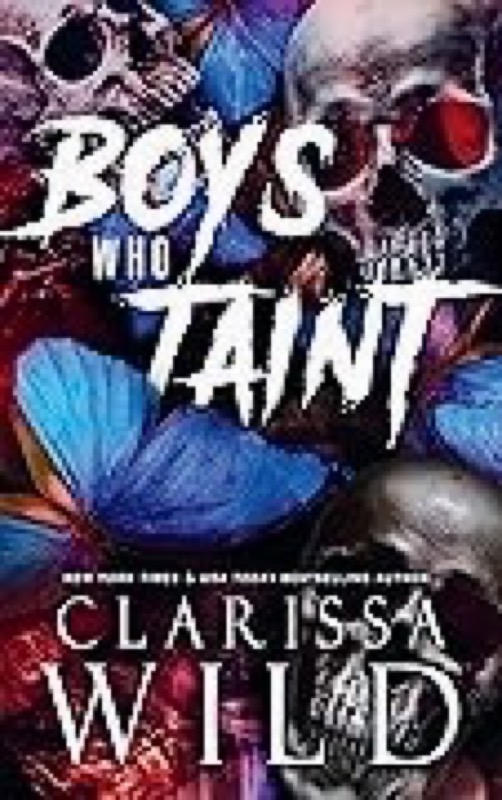
Boys Who Taint
New York Times & USA Today Bestselling Author
Hook & thesis
In Boys Who Taint, Clarissa Wild orchestrates a tempestuous exploration of obsession and power dynamics within the confines of a toxic high school environment. Verdict: This novel dares to expose the seductive allure of darkness, compelling readers to question the fine line between desire and destruction.
The contextual pivot
As a work within the bully-romance subgenre, Boys Who Taint nestles comfortably alongside titles like The Deal by Elle Kennedy and Cruel Intentions. Wild’s narrative taps into familiar tropes—enemies to lovers and dark romance—but she skillfully subverts expectations, drawing in an audience that craves both tension and emotional complexity. While the book caters to niche desires for darker themes, it also possesses a broader appeal through its incisive portrayal of youth grappling with identity and power. Wild’s reputation as a bestselling author further amplifies her ability to bridge these concepts for both devoted fans and hesitant newcomers.
Deep-dive critique
The novel employs a dual perspective that shifts between the protagonists, allowing readers to delve into the intricacies of their psyches. This structure, while effective in building tension, occasionally falters, leading to pacing issues as certain chapters drag while others race through pivotal moments. Wild’s prose often dances on the edge of poetic, particularly in her descriptions of the protagonists’ inner turmoil, which serves to heighten the emotional stakes. However, at times, the dialogue veers into melodrama, undermining the authenticity of character interactions.
Thematically, Boys Who Taint successfully immerses readers in the complexities of toxic relationships, with a deft exploration of how love can often masquerade as obsession. The book’s use of death imagery serves not only as a manifestation of the characters’ emotional states, but also as a haunting reminder of the consequences of their choices. Yet, while the climax offers a moment of catharsis, the resolution feels somewhat rushed, leaving questions about character growth and redemption lingering in the air.
Discussion launchpad
Wild’s ability to weave darkness into the fabric of romance raises significant questions about the portrayal of toxic relationships in contemporary literature. Is it a glorification of unhealthy dynamics, or a cautionary tale?
Questions for the room:
- How do the characters’ flaws enhance or detract from the romantic tension?
- In what ways does the dual perspective enrich or complicate the reader’s understanding of obsession?
- Do you believe the novel romanticizes toxicity, or does it serve as a critique?
- How does the use of death imagery affect your perception of the characters’ journeys?
- What lingering questions do you have about the characters’ futures after the final page?
#TheOrchidRoom #bullyromance #darkromance #gothic #contemporary