
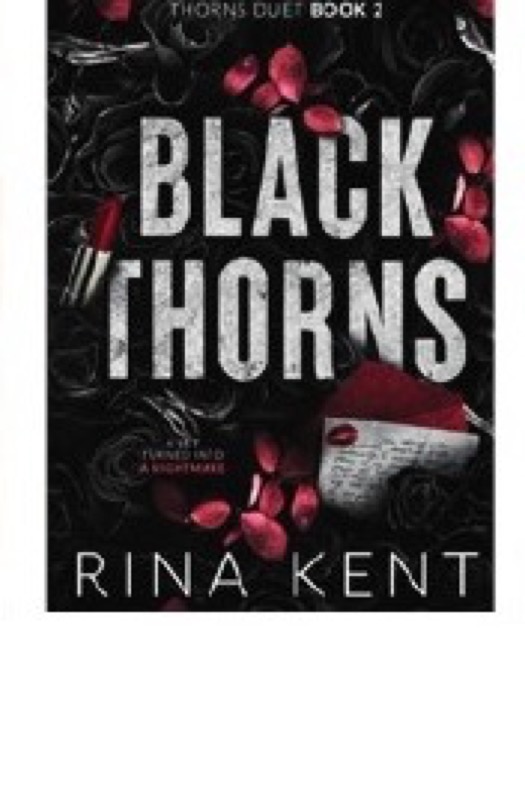
Black Thorns
Thorns Duet Book 2
Hook & thesis
In Rina Kent’s Black Thorns, the dark allure of bully romance intertwines with themes of emotional manipulation and redemption, crafting a narrative that both entices and unsettles. Verdict: This novel deftly navigates the treacherous landscape of desire and vengeance, leaving the reader questioning the very nature of love amidst cruelty.
The contextual pivot
Black Thorns stands as the second installment in the Thorns Duet, a series that explores the complexities of relationships marred by psychological tension and toxic dynamics. Within the broader genre of bully romance, this work challenges traditional tropes by delving into the psychological underpinnings of its characters rather than merely playing to the sensationalism often found in the genre. Kent’s narrative echoes the tonal darkness of authors like Penelope Douglas and Tijan, yet distinguishes itself by its raw emotional depth. The invisible audience here is likely composed of readers who crave complexity within their romantic narratives, as Black Thorns bridges the niche appeal of dark romance with a more general audience’s appetite for character-driven storytelling.
Deep-dive critique
Kent’s structural choices enhance the thematic exploration of power dynamics and emotional manipulation. The dual perspective allows readers to intimately engage with both protagonists, fostering an understanding of their internal conflicts. This choice not only serves to heighten tension but also to evoke empathy for characters whose motivations intertwine desire with deep-seated insecurities. The pacing, however, occasionally falters; moments of introspection can drag, threatening the narrative momentum, especially in the latter half.
Prose in Black Thorns is sharp and evocative, with vivid imagery that grounds the reader in the emotional landscape—dark thorns and black roses become potent symbols of the characters’ entangled fates. Yet, the dialogue sometimes veers into cliché, undermining moments that could otherwise resonate more profoundly. Kent’s world-building, particularly the social hierarchies and the claustrophobic atmosphere of the school setting, effectively amplifies the stakes, yet could benefit from deeper exploration of secondary characters, whose roles feel somewhat one-dimensional. The ending, while satisfying in its resolution of key conflicts, raises questions about the sustainability of such a fraught relationship, leaving a lingering unsettledness that aligns with the novel’s themes.
Discussion launchpad
Black Thorns provokes intense debate on the morality of its romantic entanglements and the portrayal of toxic relationships as desirable. The juxtaposition of love and pain invites readers to reflect on their perceptions of romance and redemption.
Questions for the room:
- Does the portrayal of emotional manipulation in the novel romanticize unhealthy relationships?
- How do the characters’ arcs reflect the idea of redemption, and is it truly earned by the end?
- In what ways does the dual perspective enhance or detract from the reader’s understanding of the protagonists?
- How do Kent’s thematic choices compare to other books you’ve read in the bully romance genre?
- What unresolved tensions linger after the conclusion, and how do they affect your overall interpretation of the story?
#TheOrchidRoom #bullyromance #darkromance #rina kent #thornsduet