
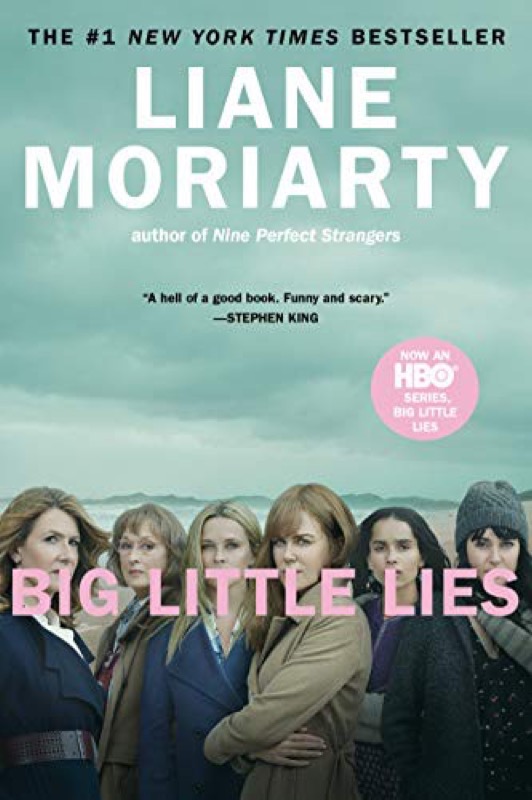
Big Little Lies (Big Little Lies, #1)
Big Little Lies, #1
Hook & thesis
Liane Moriarty’s Big Little Lies unearths the dark underbelly of suburban life, where seemingly perfect facades conceal harrowing truths. Verdict: Beneath its glossy surface lies a chilling exploration of violence and complicity, revealing that even the most idyllic settings can harbor shadows of despair.
The contextual pivot
Positioned firmly within the dark-thriller genre, Big Little Lies wades through treacherous waters of domestic abuse, bullying, and the complexities of female friendships. Moriarty, known for her intricate character studies and social commentary, navigates familiar tropes of the ‘domestic noir.’ This novel, while appealing to a niche market of readers craving suspense laced with psychological depth, bridges the gap to general audiences through its relatable and often painfully recognizable scenarios. Comparatively, it echoes the work of authors like Gillian Flynn, yet Moriarty’s approach is steeped in the everyday horrors that lurk beneath suburban tranquility rather than the overt psychological manipulation seen in Flynn’s narratives.
Deep-dive critique
Moriarty deftly employs a non-linear narrative structure, interspersing present-day events with flashbacks that gradually reveal the characters’ dark secrets. This pacing serves to heighten tension; readers are drawn in by a mystery that unfolds like a delicate flower, only to expose its thorns in the final act. The multiple perspectives offer a rich tapestry of voices, though at times this multi-POV approach risks diluting the emotional weight of individual story arcs. Characterization excels, particularly in the portrayal of Madeline, Celeste, and Jane, whose struggles resonate deeply amidst the chaos of their lives. However, the dialogue occasionally slips into melodrama, occasionally undermining the authenticity of their experiences. Notably, the thematic exploration of violence—both domestic and emotional—while poignant, may leave readers grappling with the ethical concerns of sensationalizing trauma for narrative gain. The ending, while dramatic, feels somewhat rushed; the revelations, though shocking, could benefit from deeper exploration to feel truly earned.
Discussion launchpad
The polarities in Big Little Lies evoke passionate debate around the ethics of storytelling, particularly regarding sensitive themes such as domestic violence and bullying. How far can an author go in portraying trauma without crossing the line into exploitation?
Questions for the room:
- Does the novel effectively balance entertainment with commentary on serious issues?
- Could Moriarty’s portrayal of female friendships be seen as empowering or as reductive?
- In what ways does the non-linear structure enhance or detract from the emotional impact?
- How do we reconcile the enjoyment of a thriller with its darker themes?
- Is the ending a resolution or a reflection of unresolved societal issues?
#LiteraryAnalysis #GothicEdge #darkthriller #mystery #theorchidroom