
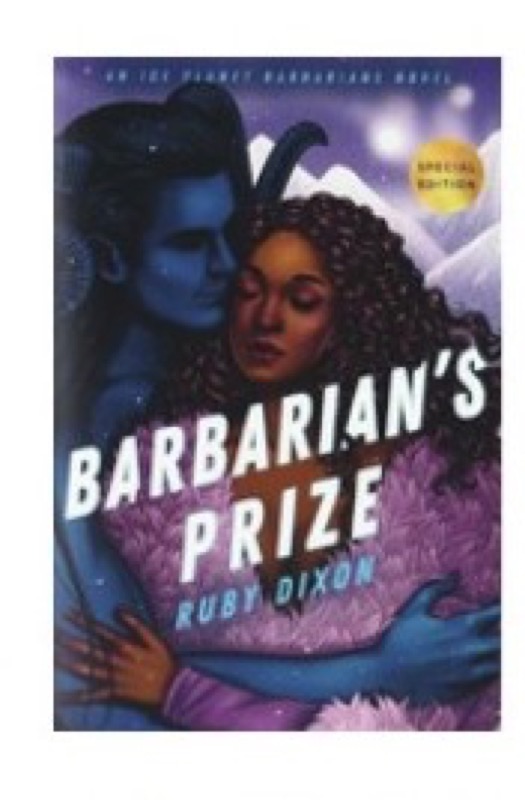
Barbarian's Prize
An Ice Planet Barbarians Novel — Special Edition
Hook & thesis
In Barbarian’s Prize, Ruby Dixon deftly navigates the treacherous waters of alien romance, where the primal instincts of survival clash with the vulnerabilities of desire. Verdict: This novel triumphs in its bold exploration of consent and connection amidst an icy, unforgiving landscape, revealing the raw, often chaotic nature of human (and alien) relationships.
The contextual pivot
Dixon’s work occupies a niche within the fantasy-romance genre, particularly appealing to readers of speculative fiction who relish the escapism of alien worlds and the thrill of fated mates. The author’s established universe of Ice Planet Barbarians has garnered a dedicated following, allowing her to blend darker themes of survival and dubcon with romance that feels both electric and perilous. This book bridges the gap between niche subgenres and broader audiences, inviting readers who may typically shy away from darker romance to grapple with the profound emotional stakes at play.
Deep-dive critique
The structure of Barbarian’s Prize pivots around a tightly woven narrative that balances pacing with character development. The alternating points of view not only enrich the emotional landscape but also create an intricate tension that propels the reader forward. Dixon’s prose is visceral, vividly painting the alien world and its inhabitants while simultaneously grounding the reader in the characters’ internal conflicts. For instance, her descriptive language around the primal instincts of the characters emphasizes the struggle between societal norms and raw desire, where the protagonist’s survival instincts are inexorably linked to her emotional awakening.
However, while the world-building excels with its immersive detail, some dialogues occasionally falter, leaning too heavily on cliché tropes that may detract from the unique voice of the characters. The pacing, particularly toward the climax, risks feeling rushed — the emotional stakes build effectively only to peak suddenly, leaving readers yearning for a deeper exploration of the aftermath. In terms of thematic success, the book navigates the complexities of consent within a fantasy framework, making it both compelling and controversial. The conclusion, while satisfying in tying up the romantic arc, leaves certain thematic tensions unresolved, compelling readers to question the nature of choice and agency in extreme circumstances.
Discussion launchpad
The interplay of survival and romance creates a fertile ground for debate, particularly regarding the moral complexities of consent portrayed in the narrative. This raises pivotal questions about the genre’s portrayal of power dynamics in relationships.
- Questions for the room:
- How do you interpret the theme of consent in the context of an alien romance?
- Does the portrayal of fated mates diminish individual agency, or does it enhance the romantic tension?
- How does the setting of an ice planet amplify or undermine the emotional stakes of the characters’ relationships?
- What are the implications of using survival as a backdrop for romantic development?
- Can we reconcile enjoyment of dark romance tropes with the ethical considerations they provoke?
#TheOrchidRoom #fantasyromance #darkromance #alienromance #romantasy