
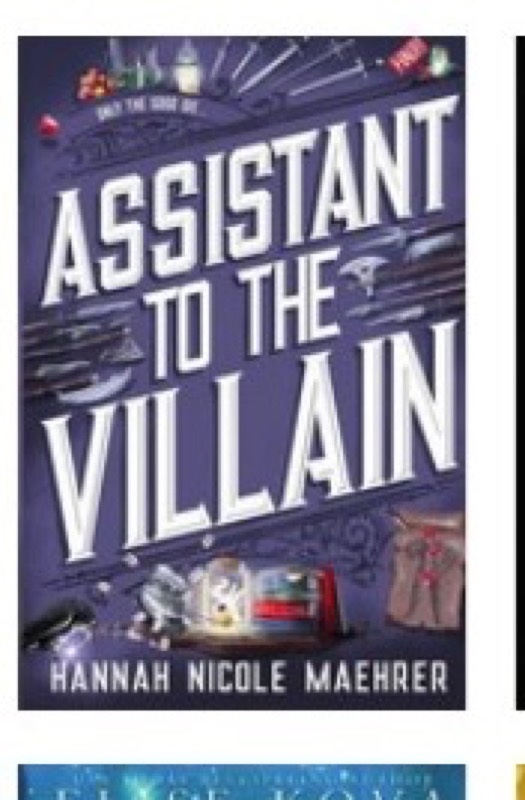
Assistant to the Villain
Hook & thesis
In “Assistant to the Villain,” Hannah Nicole Maehrer crafts a tantalizing exploration of desire and loyalty, intertwining the complexities of human emotion with the fantastical. Verdict: This novel delivers a chillingly seductive narrative that simultaneously praises and critiques the allure of villainy.
The contextual pivot
Situated within the realms of fantasy-romance, this work echoes the thematic depth found in authors like Sarah J. Maas and Jennifer L. Armentrout, yet it carves its own niche by blending the romantic with the gothic. Maehrer’s prose resonates with an audience that revels in the duality of love and darkness, bridging the gap between niche tropes and a broader fantasy readership. This book invites those who might be hesitant about darker themes to engage with a richly layered narrative that challenges traditional tropes of heroism and villainy.
Deep-dive critique
The structure of “Assistant to the Villain” is a masterclass in pacing, with Maehrer expertly weaving tension throughout the narrative, allowing moments of quiet reflection to punctuate the more intense scenes of emotional and physical stakes. The novel employs a dual perspective that sheds light on the inner workings of both the protagonist and the villain, creating a complex interplay of motivations and desires. This choice enhances the thematic exploration of loyalty and betrayal, as readers are drawn into the conflicting allegiances that define the characters’ relationships.
Characterization stands out as a notable strength. The protagonist’s emotional depth is rendered with a deft touch; her internal struggles and desires are palpable, evoking sympathy even as she navigates morally grey waters. Dialogue is sharp and evocative, making the characters’ interactions feel both immediate and charged with tension. Maehrer’s world-building effectively combines lush descriptions with a sense of peril, drawing readers into a realm where danger and desire coexist. However, at times, the emotional intensity risks overshadowing the plot’s momentum, leaving certain threads feeling underdeveloped by the climax.
The ending, while dramatic and filled with potential for future exploration, raises questions about whether it fully resolves the tensions that have been building throughout the book. It teeters on the edge of satisfaction and ambiguity, which may resonate differently with readers. Is it an earned conclusion, or does it leave too many desires unfulfilled?
Discussion launchpad
The novel’s interplay of desire and detachment creates a ripe ground for discussion, with its morally ambiguous characters eliciting both admiration and disdain. This tension is likely to evoke strong opinions within our group.
Questions for the room:
- Does the portrayal of the villain challenge or reinforce stereotypes within the genre?
- How effectively does the dual perspective enhance or detract from the reader’s experience?
- Are the emotional stakes high enough to justify the protagonist’s choices?
- What role does fantasy violence play in the development of the characters’ relationships?
- How might the ending influence your view of the novel’s overall effectiveness?
#TheOrchidRoom #fantasyromance #romantasy #darkromance #literaryanalysis