
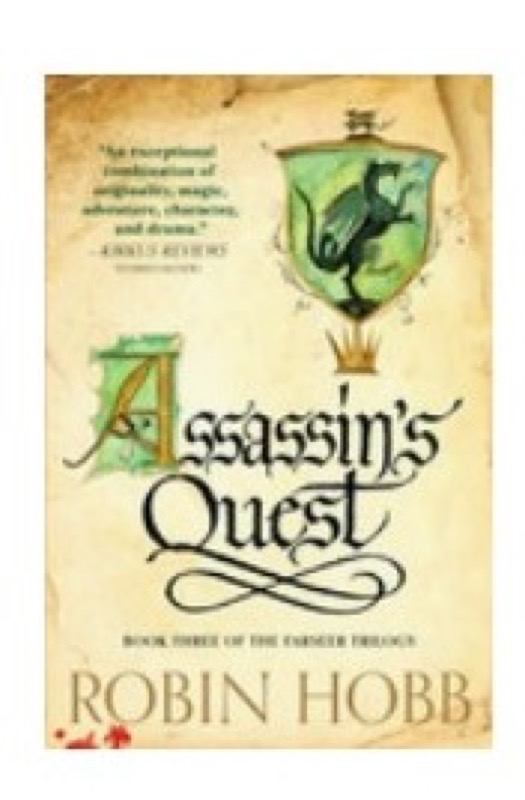
Assassin's Quest
Book Three of the Farseer Trilogy
Hook & thesis
In Assassin’s Quest, Robin Hobb delves into the psyche of her complex protagonist, FitzChivalry Farseer, as he navigates betrayal, loyalty, and the ramifications of power. Verdict: This novel is a darkly enchanting exploration of the cost of love and the weight of destiny, where every choice is steeped in consequence.
The contextual pivot
Positioned within the burgeoning landscape of fantasy romance, Assassin’s Quest stands out as a culmination of Hobb’s deft world-building and character exploration. It bridges the niche of dark fantasy with broader themes of emotional resonance, appealing to readers who crave depth alongside the traditional tropes of magic and adventure. Hobb’s work resonates with fans of George R.R. Martin and Patrick Rothfuss, yet she carves her own space by focusing on introspection and relational dynamics rather than sheer spectacle. The invisible audience here comprises not only fantasy enthusiasts but also those who appreciate profound character studies underpinning romantic tension.
Deep-dive critique
Hobb’s narrative structure in Assassin’s Quest is marked by its rich, reflective pacing. The story unfolds through Fitz’s first-person perspective, immersing readers in his internal struggles and desires, which are often at odds with his obligations as an assassin. This choice of POV enhances the emotional stakes, allowing us to feel the weight of his decisions viscerally. The timeline, which oscillates between past regrets and present dilemmas, serves to heighten the tension surrounding Fitz’s journey and the revelations he must face.
The prose is lyrical, yet grounded, balancing poetic descriptions of the world with sharp dialogue that reveals character motivations and conflicts. Hobb’s ability to convey emotional intensity without resorting to melodrama is a hallmark of her craft; every interaction is laden with subtext that ignites the reader’s imagination. The world-building is intricate, and the magic system, while captivating, often mirrors Fitz’s inner turmoil — a reflection of how power can both liberate and imprison.
However, the pacing can feel languid at times, particularly in the middle sections where introspection dominates the narrative. Some readers may find themselves longing for more action or immediate resolution, leading to a sense of frustration. Despite this, the ending is not only earned but resounding, as it encapsulates the themes of sacrifice and redemption, leaving a lasting impact that resonates beyond the final page.
Discussion launchpad
Hobb’s work invites both admiration and critique, particularly regarding its pacing and emotional depth. The polarities in this discussion could center around whether the introspective nature of the narrative enriches or detracts from the overall experience.
Questions for the room:
- How do you feel about the balance between action and introspection in the novel? Does it enhance or detract from your engagement?
- In what ways do you think Fitz’s character embodies the themes of love and sacrifice?
- How does Hobb’s treatment of emotional intensity compare to other fantasy authors you’ve read?
- What are your thoughts on the resolution of Fitz’s journey? Was it satisfying for you?
- How do the elements of fantasy violence shape the romantic threads within the story?
#TheOrchidRoom #fantasyromance #darkromance #assassinsquest #literaryanalysis