
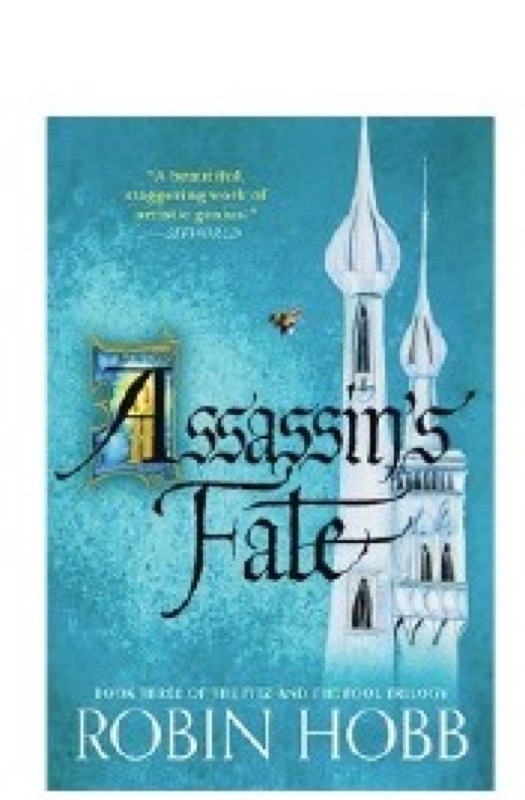
Assassin's Fate
Book Three of the Fitz and the Fool Trilogy
Hook & thesis
In Assassin’s Fate, Robin Hobb plunges readers into the intricate and often brutal tapestry of fate, identity, and sacrifice within her Fitz and the Fool Trilogy. Verdict: Hobb masterfully marries the themes of love and loss, elevating the narrative beyond mere fantasy into a poignant exploration of the human condition.
The contextual pivot
Positioned within the realms of fantasy and romance, Hobb’s work often blurs the lines between distinct genres, appealing to both dedicated genre enthusiasts and casual readers. The invisible audience here craves not just adventure but a deep emotional resonance, reminiscent of authors like Patrick Rothfuss and Neil Gaiman, yet uniquely infused with Hobb’s signature melancholic prose. This book, while a culmination of a trilogy, stands as a testament to Hobb’s ability to weave niche tropes of dark romance and philosophical introspection into a narrative that speaks broadly to themes of agency and consequence.
Deep-dive critique
Hobb’s structure—character-driven and heavy with introspection—serves to deepen the reader’s engagement, albeit at a leisurely pace that may frustrate those seeking quicker resolutions. The dual perspectives of Fitz and the Fool allow for a rich exploration of their intertwined destinies, but occasionally, the pacing falters under the weight of their existential musings, risking reader fatigue. However, the beauty of Hobb’s prose shines through in dialogue, where unspoken truths and deep emotional currents create a palpable tension.
The thematic success lies in the exploration of sacrifice and the unbearable weight of destiny, skillfully illustrated through the characters’ choices. Hobb does not shy away from emotional intensity, crafting scenes that resonate with heart-wrenching clarity. Yet, the ending—ambiguous and deeply satisfying—invites both relief and sorrow, cementing its earned status in the reader’s journey.
Discussion launchpad
Hobb’s narrative choices invite polarizing reactions—some may find her pacing a deliberate build-up to emotional payoff, while others may see it as a hindrance. The darkness that lingers throughout the book poses questions about morality and the nature of fate, leaving much unsaid about the characters’ futures.
Questions for the room:
- How do you perceive the balance between plot-driven action and character-driven introspection in Hobb’s work?
- What are your thoughts on the moral ambiguities presented in the characters’ decisions?
- Does the ending serve as a satisfying conclusion to Fitz’s journey, or does it leave too many questions unanswered?
- How does Hobb’s portrayal of love as both a motivator and a curse resonate with your own interpretations of romance in fantasy?
- In what ways does Hobb challenge conventional fantasy tropes to redefine the genre?
#TheOrchidRoom #fantasyromance #romantasy #darkromance #assassins #fate