
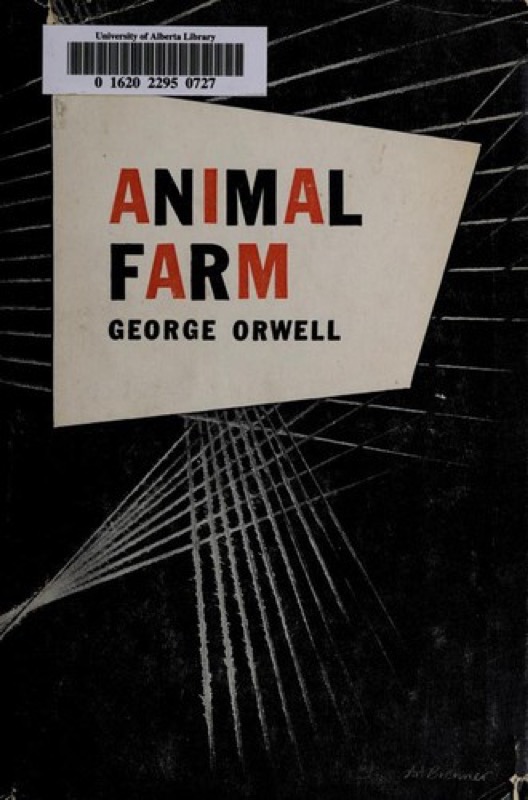
Animal Farm
Hook & thesis
George Orwell’s Animal Farm serves as a poignant allegory for the corruption of socialist ideals and the inherent flaws in human nature. Verdict: This novella brilliantly illustrates how power can corrupt, revealing the fragility of freedom and the ease with which it can be subverted.
The contextual pivot
Animal Farm occupies a significant place in the genre of political satire and allegory, paralleling works such as Aldous Huxley’s Brave New World and Kafka’s The Trial. Orwell, known for his critical stance on totalitarianism, uses a seemingly simple narrative about farm animals to convey complex themes about revolution, oppression, and betrayal. The invisible audience here extends beyond literary enthusiasts; it also resonates with readers seeking insight into historical and contemporary political landscapes, making Orwell’s work accessible while still engaging with niche political discourse.
Deep-dive critique
Orwell employs a straightforward narrative structure that belies the depth of its themes, unfolding through the perspective of the farm animals, particularly the pigs. This use of a third-person omniscient point of view allows readers to witness the gradual erosion of ideals and the rise of authoritarianism without the bias of a single character’s perspective. The pacing is deliberate, reflecting the slow but inevitable decline of the farm’s original revolutionary spirit.
The characters are well-crafted, with figures like Napoleon and Snowball representing the stark contrasts of power dynamics and ideological conflict. Orwell’s prose is sharp and effective, using vivid imagery and symbolism—such as the windmill representing the false promise of progress—to critique the betrayal of the revolution. However, some may argue that the allegorical nature can feel heavy-handed at times, potentially alienating less politically aware readers. The ending, marked by the chilling realization that the pigs have become indistinguishable from the oppressive humans, is both earned and disturbing, encapsulating the cyclical nature of power.
Discussion launchpad
Animal Farm invites a rich discussion on the nature of power, revolution, and societal structure, with polarizing elements that can ignite debate.
Questions for the room:
- How effectively does Orwell balance allegory and narrative?
- In what ways does the text reflect contemporary politics?
- Can the events in Animal Farm be applied to modern societies?
- What do the characters reveal about human nature and societal structures?
- Does the ending offer hope, or is it purely nihilistic?
#LitClass #Grade11 #RequiredReading #politicalsatire #dystopian