
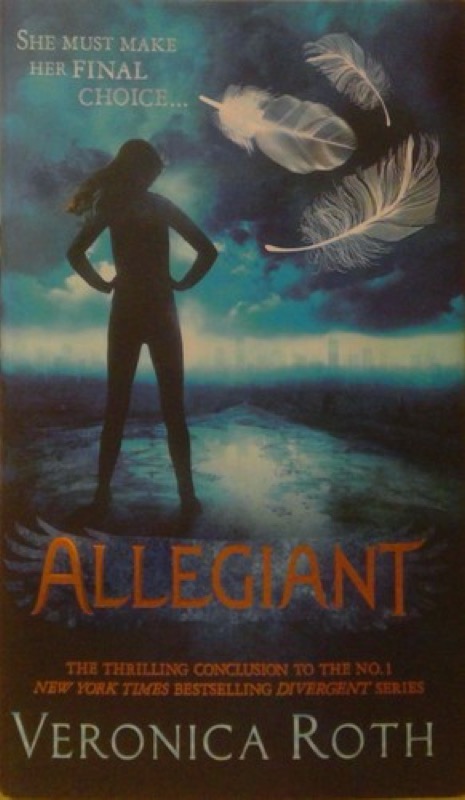
Allegiant (Divergent, #3)
Divergent Series Book 3
Hook & thesis
In Allegiant, the final installment of Veronica Roth’s Divergent trilogy, the narrative’s heart beats in the clash of identity and loyalty against a backdrop of societal upheaval. Verdict: Roth crafts a complex exploration of freedom and choice that ultimately falters under the weight of its ambitious themes, leaving readers questioning the very fabric of its moral universe.
The contextual pivot
Allegiant occupies a vital space within the young adult dystopian genre, continuing the exploration of identity and societal structures established in previous installments. Roth’s work parallels that of other genre titans like Suzanne Collins (The Hunger Games) and Lois Lowry (The Giver), whose narratives also grapple with the implications of choice in constrained environments. The invisible audience—young adults seeking both escapism and introspection—might find this conclusion a bridge between familiar tropes and deeper philosophical questions, though the tonal shift in this final act may challenge even dedicated fans.
Deep-dive critique
Structurally, Allegiant diverges from its predecessors by employing dual points of view, shifting between Tris and Tobias. While this technique allows for richer character exploration, the pacing suffers, with moments of introspection stalling the narrative momentum. Roth’s prose remains engaging, but some dialogue feels contrived, reducing characters to expository vessels rather than fully realized individuals. Themes of betrayal and sacrifice are powerfully interwoven, yet the execution of pivotal character arcs, particularly the ending, risks alienating readers—some may view it as a bold choice, while others might perceive it as an emotional disservice. The exploration of genetic manipulation and societal division is compelling, yet the world-building occasionally lacks the depth seen in earlier works, making the stakes feel less immediate.
Discussion launchpad
Allegiant presents polarizing elements that can ignite a fervent discussion among readers. Its unexpected character fates may divide opinions, while the exploration of loyalty raises questions about the nature of personal sacrifice in the pursuit of a greater good.
Questions for the room:
- Does the dual POV enhance or detract from the emotional stakes of the story?
- How effective is Roth’s handling of betrayal as a theme—does it resonate or feel forced?
- In what ways does the ending reflect (or challenge) common tropes in the young adult dystopian genre?
- How does Allegiant compare to its predecessors in terms of thematic depth and emotional impact?
- What unresolved questions about identity and choice does the book leave lingering?
#LiteraryAnalysis #darkthriller #romanticsuspense #dystopian #youngadult #theorchidroom