
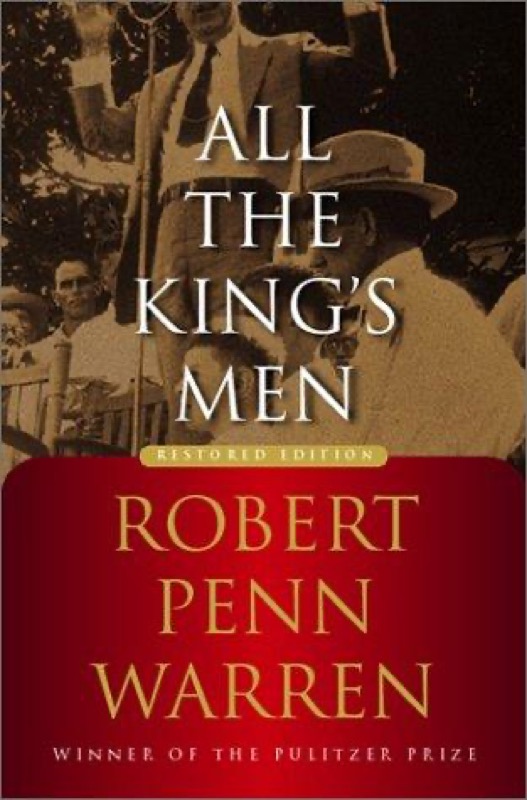
All the King's Men
Hook & thesis
In Robert Penn Warren’s All the King’s Men, the moral decay of political ambition serves as a dark mirror reflecting the human soul’s capacity for betrayal. Verdict: This novel is a haunting exploration of power’s corrosive effects, where idealism succumbs to corruption and darkness reigns.
The contextual pivot
Sitting at the crossroads of dark thriller and literary fiction, All the King’s Men is a seminal work that dissects the psyche of its characters against the backdrop of American politics. Warren, a titan of American literature, creates a vivid tableau of the 1930s political landscape, evoking comparisons to classic works like The Great Gatsby and The Age of Innocence. The book navigates niche themes of political corruption and moral ambiguity, making it both a critical examination for literary audiences and a resonant tale for general readers grappling with contemporary political disillusionment.
Deep-dive critique
Warren’s structural choices—primarily his use of first-person narration through the character of Jack Burden—create an intimate, yet fraught lens through which the narrative unfolds. The pacing ebbs and flows, mirroring Burden’s own psychological turmoil as he grapples with the ethical implications of his actions. The nonlinear timeline serves to underscore the cyclical nature of history and the inescapable recurrence of corruption, effectively emphasizing the book’s central thesis.
Warren’s prose is rich and evocative, filled with poetic introspection that enhances the thematic weight of betrayal and ambition. For instance, the recurring motif of the “king” symbolically ties to the larger narrative of power dynamics, illustrating how those who seek it often lose their humanity. Conversely, some dialogue drifts into a didactic tone, risking the novel’s immersion at times. However, the character development remains a strong suit; figures like Willie Stark and Jack Burden are intricately crafted, their moral complexities adding depth to the exploration of good versus evil. The ending, while tragic, feels almost inevitable—a culmination of the characters’ moral failures and a reflection on the futility of their aspirations, leaving readers with a chilling sense of resonance.
Discussion launchpad
The book’s exploration of political corruption and moral decay raises significant questions about the nature of power and its impact on the human spirit.
- How do the characters’ choices reflect broader societal values, and what does this say about contemporary politics?
- Does the book ultimately offer a nihilistic view of human nature, or is there a glimmer of redemption?
- What role does the setting play in shaping the characters’ destinies, and how does it compare to other political narratives in literature?
- How does Warren’s narrative technique impact our empathy for the characters?
Questions for the room:
- Do you see parallels between the political landscape of All the King’s Men and today’s political climate?
- Is there a character whose moral compass you empathize with, or do they all succumb to the darkness?
- How effective is Warren’s use of symbolism in conveying the themes of power and betrayal?
#LiteraryAnalysis #GothicEdge #darkthriller #politics #betrayal #TheOrchidRoom