
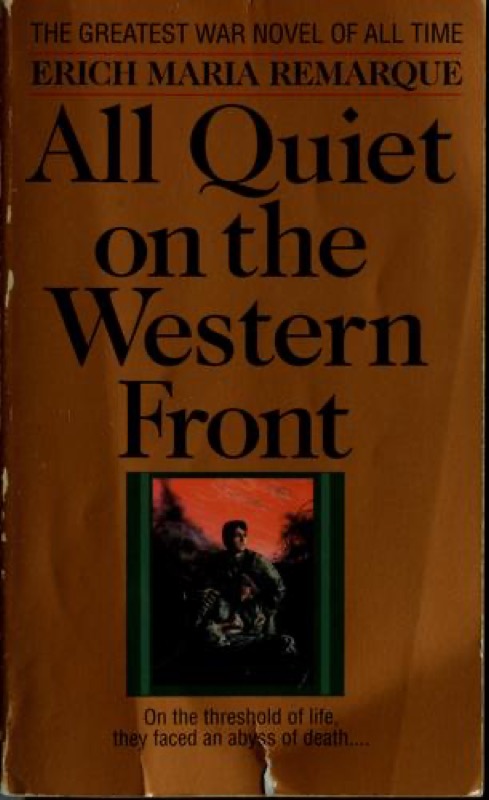
All Quiet on the Western Front
Hook & thesis
Erich Maria Remarque’s All Quiet on the Western Front serves as a harrowing exploration of the disillusionment wrought by war, laying bare the tragic irony of youthful idealism shattered by the brutal reality of combat. Verdict: This novel is a masterclass in depicting the grotesque cost of violence, where the true horror lies not only in the battlefield but in the haunting silence of survival.
The contextual pivot
Nestled within the dark-thriller category, Remarque’s work stands as a seminal text in the canon of war literature, preceding the gothic explorations of trauma that would follow in later decades. The book confronts the horrors of World War I, a subject that resonates with readers seeking not just action but profound psychological depth. While it shares thematic kinship with other gritty explorations of war, like Tim O’Brien’s The Things They Carried, Remarque’s voice delivers a more stark and haunting narrative, bridging niche war trauma themes to a broader audience through its universal depiction of loss and despair.
Deep-dive critique
The structure of All Quiet on the Western Front employs a first-person narrative that immerses readers in the protagonist’s visceral experiences, enhancing the raw emotional impact of the text. The pacing, interspersed with moments of fleeting camaraderie and stark violence, mirrors the chaotic nature of war itself. Remarque excels in his use of imagery, crafting scenes that evoke both the camaraderie of friendship and the grotesque reality of death. For instance, his descriptions of the battlefield are visceral and unsettling, deftly illustrating the physical and psychological toll of warfare.
However, the narrative does suffer from moments of repetitive despair that risk dulling the emotional edge; the relentless cycle of loss can feel overwhelming without sufficient contrast. Dialogue feels authentic and jarring, capturing the fleeting interactions that define the soldiers’ lives, though at times, it skirts deeper character development that might enrich their personal arcs. The ending, a haunting silence after the storm of violence, is both earned and devastating, encapsulating the futility of war without glorifying it.
Discussion launchpad
The stark realities presented in All Quiet on the Western Front challenge readers to confront uncomfortable truths about heroism and the nature of sacrifice. The polarities of war as a noble endeavor versus a futile waste of life will undoubtedly ignite debate.
Questions for the room:
- How do we reconcile the romantic notions of heroism with the brutal realities depicted in the novel?
- What role does friendship play as a coping mechanism in the face of trauma?
- In what ways does Remarque’s depiction of war differ from contemporary portrayals in literature and media?
- How does the silence in the novel’s conclusion speak to the experiences of veterans today?
- Can the graphic violence serve a greater purpose in the narrative, or does it risk desensitizing the reader?
#LiteraryAnalysis #GothicEdge #darkthriller #war #trauma #theorchidroom