
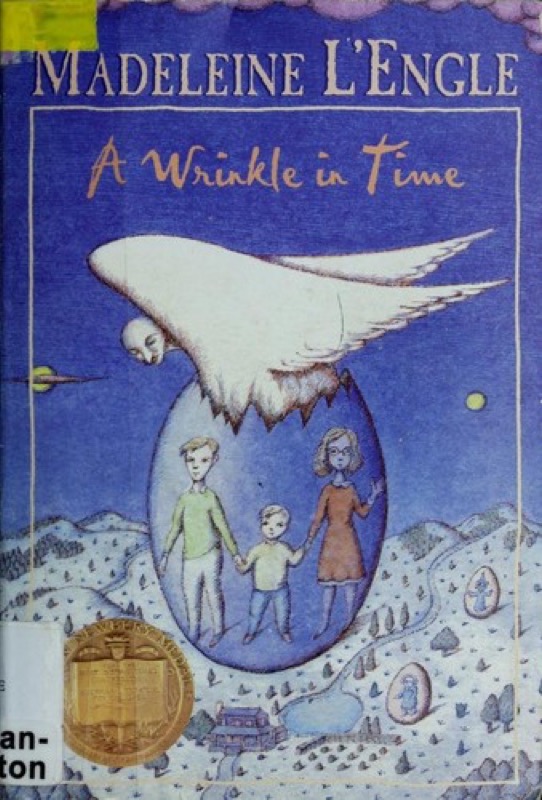
A Wrinkle in Time (Time Quintet, #1)
Time Quintet, #1
Hook & thesis
Madeleine L’Engle’s A Wrinkle in Time deftly blends science fiction with deep emotional themes of love and individuality, exploring the battle between good and evil through the lens of a young girl’s adventure. Verdict: The book successfully intertwines its fantastical elements with profound human conflicts, illustrating that love is the ultimate force against darkness.
The contextual pivot
As a cornerstone of juvenile fiction, A Wrinkle in Time occupies a unique space within the science fiction genre, standing alongside works like C.S. Lewis’s The Chronicles of Narnia and Philip Pullman’s His Dark Materials. L’Engle’s narrative combines imaginative world-building with relatable family dynamics, appealing not just to children but also to adult readers who appreciate the underlying complexities. The book addresses universal themes of self-acceptance and the importance of personal connections, making it accessible while still engaging niche audiences interested in speculative fiction.
Deep-dive critique
L’Engle employs a nonlinear narrative that reflects the complexities of time travel, effectively mirroring the characters’ emotional journeys. The use of multiple perspectives, particularly through Meg Murry’s point of view, invites readers into her struggles with self-doubt and belonging. The pacing, while at times uneven due to the shifts in time and space, ultimately serves the thesis by highlighting the urgency of the characters’ quest.
Craft-wise, L’Engle shines in her character development, particularly in Meg, whose growth from insecurity to confidence resonates deeply. Dialogues, rich with subtext, convey not only plot but also the emotional stakes involved. However, some world-building aspects may feel underexplored, leaving readers craving a deeper understanding of the tesseract and its implications. The ending, while hopeful, may feel abrupt, leaving some questions lingering about the resolution of conflicts presented throughout the story.
Discussion launchpad
L’Engle’s work raises engaging polarities that can spark significant debate among readers. The balance of scientific concepts with emotional themes may divide opinions on the book’s effectiveness.
Questions for the room:
- Does the fantastical nature of the plot detract from the emotional realism?
- How does L’Engle’s depiction of family dynamics influence the narrative?
- Are the science fiction elements accessible to all readers, or do they alienate some?
- In what ways does the book’s moral message resonate in today’s context?
- What unresolved questions linger after the conclusion, and how do they affect your interpretation of the story?
#LitClass #Grade11 #RequiredReading #TimeTravel #Family #Friendship