
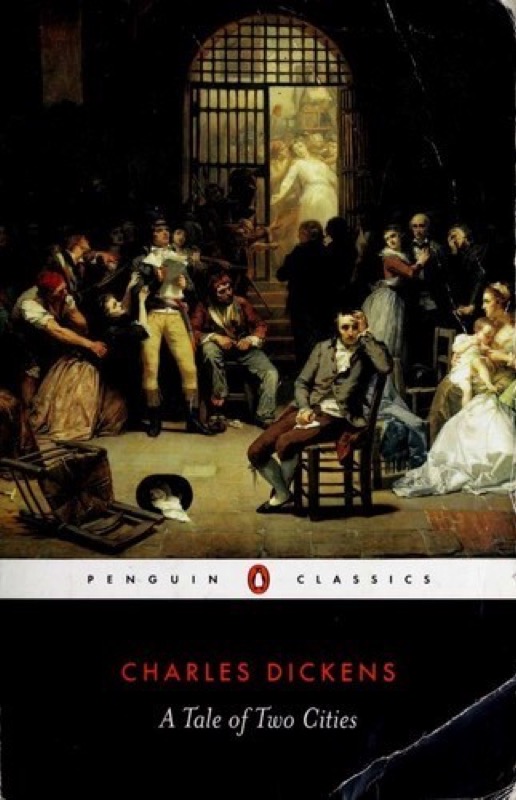
A Tale of Two Cities
Hook & thesis
Charles Dickens’ A Tale of Two Cities intricately weaves themes of resurrection and sacrifice against the backdrop of the French Revolution, exploring the duality of human nature. Verdict: This novel remains a timeless examination of social justice and personal redemption amidst chaos.
The contextual pivot
In the landscape of historical fiction, particularly within the dark-thriller genre, A Tale of Two Cities stands as a monumental narrative that delves into the depths of human suffering and moral dilemmas. Dickens skillfully crafts a tale that is not only a commentary on the tumultuous period of the French Revolution but also a critique of class struggles that resonate through time. When compared to contemporaries like Victor Hugo, Dickens presents a more restrained approach to violence, focusing instead on the psychological repercussions of societal upheaval. The book bridges the gap between niche historical narratives and broader audiences through its universal themes of sacrifice and redemption, making it accessible yet profound.
Deep-dive critique
The structure of A Tale of Two Cities is distinctive, with its dual settings of London and Paris serving as a metaphorical backdrop for the dichotomy of order and chaos. The novel employs a non-linear timeline, moving between past and present, which enhances the theme of resurrection as characters evolve and confront their former selves. Dickens’ use of third-person omniscient point of view allows for a comprehensive exploration of character motivations, particularly in Sydney Carton and Charles Darnay, whose parallel paths underscore the novel’s thematic heart.
In terms of craft, Dickens excels with vivid imagery and a rich tableau of historical detail, immersing readers in the era’s atmosphere. However, some dialogue can feel didactic, occasionally detracting from the emotional weight of the narrative. Characterization is particularly strong in Carton, whose journey from apathy to self-sacrifice is poignant and ultimately earned by the climax. The ending, featuring Carton’s famous final act, serves as a powerful culmination of the themes of redemption and personal sacrifice, solidifying its impact in the reader’s mind while leaving a lingering sense of hope amidst despair.
Discussion launchpad
The polarities in A Tale of Two Cities stem from its exploration of justice versus revenge, as well as the moral implications of sacrifice for the greater good.
Questions for the room:
- How does Dickens’ portrayal of class struggle resonate with contemporary issues?
- In what ways does the theme of resurrection manifest differently in Carton versus Darnay?
- Can the novel’s ending be interpreted as wholly optimistic, or does it carry a more complex, ambiguous message?
- How does the novel compare to modern interpretations of revolution and social change in literature?
- What role does historical context play in shaping our understanding of the characters’ motivations?
#LiteraryAnalysis #darkthriller #historical #redemption #theorchidroom