
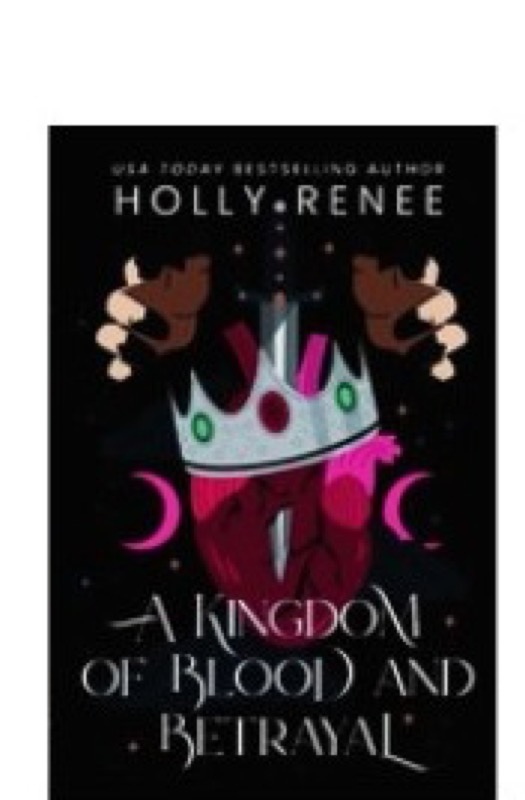
A Kingdom of Blood and Betrayal
Hook & thesis
In A Kingdom of Blood and Betrayal, Holly Renee crafts a landscape riddled with intrigue and sensual tension, where loyalty is as malleable as the power struggles of its royal cast. Verdict: This novel pulsates with a visceral energy, effectively capturing the essence of desire entwined with treachery, making it an intoxicating read that lingers long after the final page.
The contextual pivot
Positioned within the fantasy-romance genre, this work straddles the line between whimsical enchantment and dark, gothic undertones. Renee’s narrative scope evokes shades of Sarah J. Maas and Jennifer L. Armentrout, merging courtly romance with the gritty realism of manipulation and betrayal. The author’s focus on bloodlines and power dynamics appeals to a niche audience drawn to morally complex characters while also having the potential to resonate with general readers who crave depth in their romantic fantasies. The interplay of dark magic and royal intrigue will particularly attract fans of intricate world-building that is rich with themes of desire and consequence.
Deep-dive critique
Renee’s structure is tightly woven, shifting perspectives that deepen the reader’s engagement with the characters’ internal conflicts and desires. The alternating points of view effectively enhance the tension, as readers are privy to the thoughts and machinations of both protagonists and antagonists. This craft choice not only builds suspense but also allows for a nuanced exploration of themes such as loyalty, betrayal, and the duality of love and power. Particularly striking is the prose, which is both lyrical and haunting; moments of visceral imagery—like the visceral snake symbolism—create a lasting impression that underscores the novel’s darker themes.
However, certain mechanical aspects falter under scrutiny. While the pacing generally maintains momentum, there are instances where the narrative lags, particularly during exposition-heavy sections that could benefit from tighter editing. Additionally, some character arcs feel underdeveloped, as certain motivations seem driven more by plot necessity than organic growth. That said, the ending, fraught with emotional stakes, delivers a satisfying resolution that leaves potential for future storytelling, making it feel earned amid chaotic twists.
Discussion launchpad
Renee’s novel presents polarizing elements that might lead to fervent debate among readers: the balance of romance against dark themes and the ethical implications surrounding power and loyalty.
Questions for the room:
- How do we reconcile the romantic idealism presented with the backdrop of betrayal and violence?
- In what ways does the portrayal of dark magic reflect contemporary societal issues?
- Do the character motivations resonate authentically, or do they serve merely as vehicles for plot advancement?
- How effectively does the dual perspective enhance the themes of desire and betrayal?
- Is the balance between gothic elements and romantic tropes successful, or does it tip too far in one direction?
#TheOrchidRoom #fantasyromance #darkromance #bloodandbetrayal #literaryanalysis