
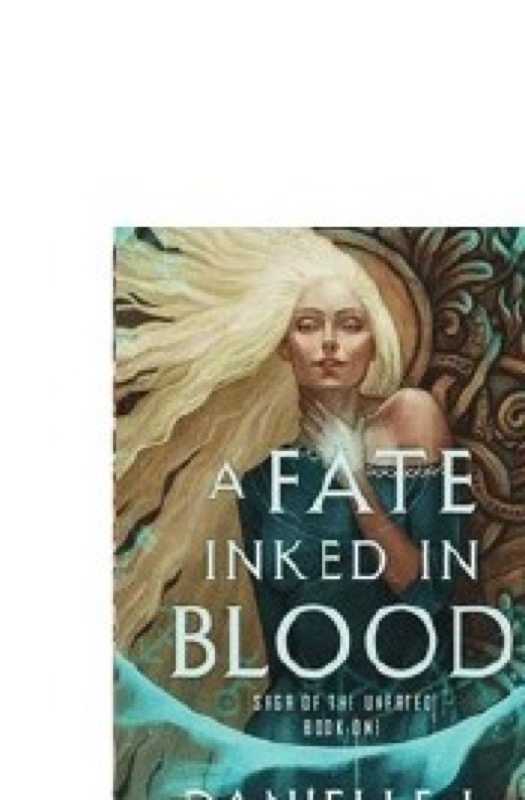
A Fate Inked in Blood
Saga of the Unfated Book One
Hook & thesis
In A Fate Inked in Blood, Danielle L. Jensen intricately weaves a tale of choice versus destiny against a backdrop of Norse-inspired mythology and fantasy romance. Verdict: This novel’s true engine lies in its exploration of the struggle to carve one’s identity in a world that imposes predestined paths, making it a compelling, if occasionally uneven, addition to the genre.
The contextual pivot
This book sits firmly within the fantasy-romance landscape, straddling the line between dark romance and traditional epic saga. Jensen’s narrative echoes the works of Sarah J. Maas and Jennifer L. Armentrout, yet it reaches into the depths of mythological lore, inviting readers into a realm where the stakes are steep and the characters’ desires are fraught with danger. The invisible audience includes both enthusiasts of fantastical worlds and those drawn to the raw emotional landscapes of romantic entanglements. Jensen successfully bridges niche tropes, offering a tale that resonates with both fantasy aficionados and romance readers alike.
Deep-dive critique
The structure of A Fate Inked in Blood is both its strength and its weakness. Jensen employs a dual POV, allowing readers to inhabit the minds of both protagonists. This choice enhances the emotional stakes but can also create a jarring pacing issue, particularly in the middle sections where the narrative drags under the weight of introspection. The timeline, while generally linear, does delve into flashbacks that expand on character motivations; however, some of these moments feel like they disrupt the story’s momentum rather than enhance it.
Craft-wise, Jensen excels in world-building, painting a vivid landscape filled with savage beauty—a hallmark of Norse mythology. Her prose is lush, though at times it veers into overwrought territory, potentially alienating readers who favor more straightforward storytelling. Character dialogue fluctuates between poignant and cliché, with some exchanges brimming with authenticity, while others feel like obligatory tropes of the genre. Notably, the ending offers a daring twist that raises questions about free will, yet it may leave some readers yearning for a more traditional resolution, which can feel earned or contrived depending on individual expectations.
Discussion launchpad
This novel probes the depths of desire, identity, and the societal chains that bind individuals, making it ripe for discussion. The polarities in A Fate Inked in Blood will surely ignite debate among readers:
- The balance between plot-driven action and character-driven introspection—does one overshadow the other?
- The effectiveness of a dual narrative perspective—does it deepen the emotional impact or dilute it?
- Jensen’s take on destiny versus free will—how does it reflect contemporary societal themes?
Questions for the room:
- How do you feel about the pacing in the middle of the book? Did it enhance or detract from your reading experience?
- In what ways did the world-building contribute to or distract from the characters’ journeys?
- How do the themes of violence and slavery resonate in the context of the characters’ relationships?
- Do you think the ending was a bold choice or a narrative misstep?
#TheOrchidRoom #fantasyromance #darkromance #norseinspired #literaryanalysis