
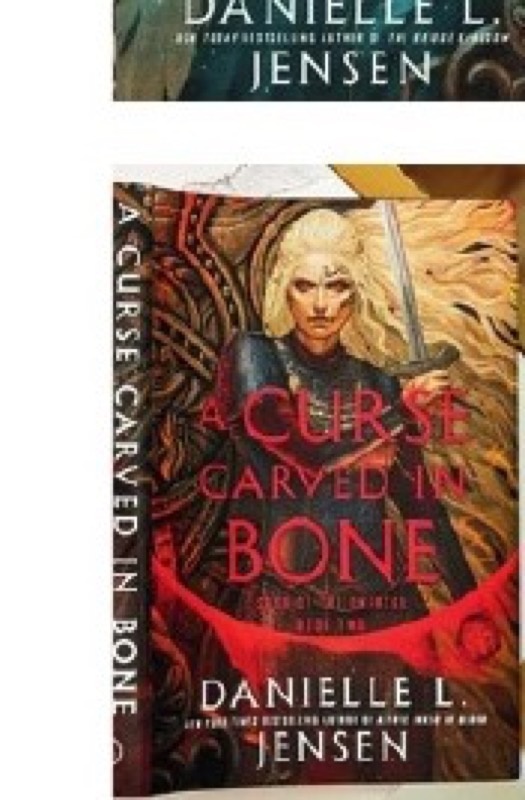
A Curse Carved in Bone
Saga of the Unfated Book Two
Hook & thesis
In A Curse Carved in Bone, Danielle L. Jensen deftly intertwines the raw power of desire with the burdens of fate, probing the depths of human conflict through a lens of Norse-inspired fantasy. Verdict: This tale grips the reader like a vice, unsettling and haunting, as Jensen explores how love can be both a sanctuary and a curse.
The contextual pivot
Positioned firmly within the burgeoning fantasy-romance genre, Jensen’s work follows in the footsteps of authors like Sarah J. Maas and Jennifer L. Armentrout, yet it carves its unique niche by intricately blending darker themes of violence and bloodshed with romantic longing. As a sequel to Saga of the Unfated, it deepens the lore established in its predecessor while appealing to both genre veterans and newcomers seeking a rich tapestry of emotional stakes. The book targets an audience that relishes complex relationships set against a backdrop of mythic struggles, effectively bridging niche tropes with broader themes of love and sacrifice.
Deep-dive critique
Jensen’s structural choices, particularly her pacing and use of multiple perspectives, create a tension that mirrors the characters’ internal tumult. The shifting POVs allow for a deeper understanding of desires and fears, though at times, this multiplicity can fracture the emotional continuity, leaving the reader grasping for cohesiveness in the narrative. The prose is lush and evocative, drawing vivid imagery that immerses the reader in its world; however, certain passages veer into melodramatic territory, which risks overshadowing the nuanced character development.
Characterization is one of Jensen’s strengths, particularly in her portrayal of the protagonist’s struggle against predestined outcomes. The dialogue crackles with wit and emotional depth, grounding the fantastical elements in relatable human experiences. Yet, the plot occasionally succumbs to genre conventions, relying on tropes that could feel predictable, especially to seasoned readers. The conclusion, while dramatic, raises questions about character agency and the nature of the curse itself—whether the ending is a true resolution or a mere precursor to further turmoil.
Discussion launchpad
Jensen’s exploration of fate versus free will creates a fertile ground for debate, particularly regarding how these themes manifest in relationships within the narrative. The tension between love and violence poses critical questions about the nature of desire in the face of destiny.
Questions for the room:
- How effectively does the novel balance its dark themes with romantic elements?
- Do the character arcs feel earned, or do they rely too heavily on genre expectations?
- What implications does the notion of a curse have for the characters’ agency throughout the story?
- How does Jensen’s use of Norse mythology enhance or detract from the emotional stakes?
- In what ways does the book challenge or reinforce the archetypes found in fantasy-romance?
#TheOrchidRoom #fantasyromance #romantasy #darkromance #literaryanalysis