
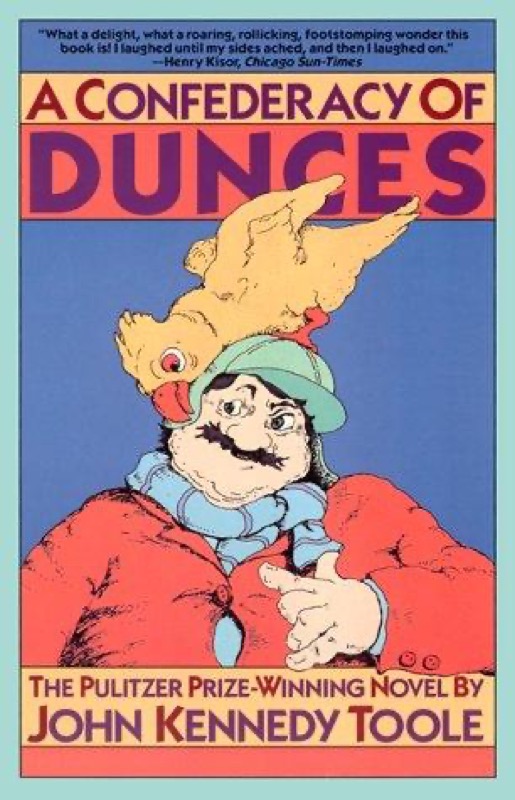
A Confederacy of Dunces
Hook & thesis
In A Confederacy of Dunces, John Kennedy Toole crafts a macabre yet humor-laden portrait of societal absurdities through the eyes of Ignatius J. Reilly, an antihero whose odyssey is rooted in an existential conflict against a world he perceives as grotesquely flawed. Verdict: This novel is a darkly comedic exploration of alienation that simultaneously entertains and unsettles, revealing the grotesque underbelly of urban life.
The contextual pivot
Tightly nestled within the genre of dark satire, Toole’s work stands out as a quintessential representation of the Southern Gothic tradition, blending humor with tragedy in a unique tapestry reflective of New Orleans’ vibrant yet decaying landscape. Unlike the works of Flannery O’Connor or Carson McCullers, who delve into moral complexities, Toole’s novel presents a more chaotic interpretation of its setting, drawing in readers who relish the absurdities of eccentricity. The invisible audience, likely comprising those who appreciate both satire and the grotesque, may find this book resonates while bridging niche literary tropes with broader comedic sensibilities.
Deep-dive critique
Toole employs a layered structure that oscillates between the absurd and the poignant, creating a narrative that reflects the chaotic essence of its protagonist. The pacing, marked by erratic shifts and surreal encounters, mirrors Ignatius’ own tumultuous psyche, though it can occasionally frustrate readers seeking conventional narrative flow. The choice of a third-person omniscient POV allows for a rich examination of New Orleans’ quirky characters, from the desperate to the delusional, illustrating how societal failures breed personal tragedy.
The prose sparkles with wit yet harbors an underlying darkness, a duality that serves Toole’s thesis effectively. For instance, Ignatius’ melancholic monologues expose the cracks in both his psyche and the world around him, revealing a despair that masks itself in humor. However, this brilliance can falter; some dialogues feel excessively verbose and may alienate readers not attuned to the rhythm of Toole’s comedic style. The ending, while climactic, leaves questions about the fate of its characters, reflecting the unresolved tensions of life itself—an earned ambiguity that resonates deeply.
Discussion launchpad
Toole’s melding of comedy and darkness invites mixed interpretations, often polarizing readers. The absurdity, while humorous, serves as a bleak commentary on societal norms, leaving some feeling unsettled rather than entertained.
Questions for the room:
- Does the humor in A Confederacy of Dunces overshadow its darker themes, or do they coexist harmoniously?
- In what ways does Ignatius’ character reflect broader societal criticisms, and can he be considered a tragic hero?
- How does the setting of New Orleans contribute to the novel’s tone and thematic depth?
- Are there moments where the absurdity detracts from the emotional weight, or does it enhance the narrative?
- What unresolved questions about the characters linger after the final page, and are they integral to the story’s impact?
#LiteraryAnalysis #GothicEdge
#darkthriller #satire #TheOrchidRoom