
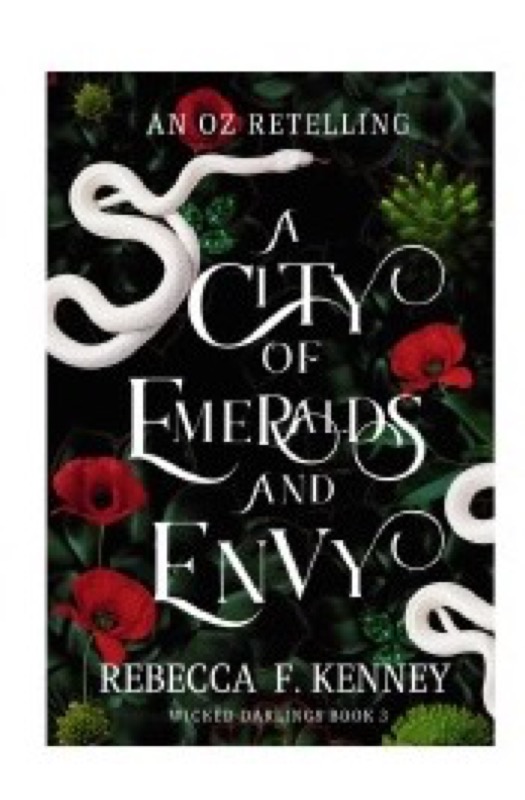
A City of Emeralds and Envy
An Oz Retelling — Wicked Darlings Book 3
Hook & thesis
A City of Emeralds and Envy is an audacious exploration of desire and envy set against a familiar yet twisted backdrop of Oz. Rebecca F. Kenney’s primary objective is to unearth the darker facets of ambition and desire, using a fantastical lens that is as alluring as it is perilous. Verdict: Kenney’s novel seduces the reader into a labyrinth of obsession, where the brightest emeralds often conceal the deepest shadows.
The contextual pivot
In the realm of fantasy romance, Kenney’s work carves a niche that is both reverent and rebellious, echoing the likes of Wicked by Gregory Maguire while simultaneously charting its own path through the thickets of dark fantasy. This book stands as the third installment in the Wicked Darlings series, yet it is meticulously crafted to engage both loyal fans of the series and new readers who crave a rich, immersive experience. The invisible audience is undoubtedly those who relish the intertwining of romance and peril, as well as the enchantment of retellings that flip the script on classic tales. Kenney deftly bridges niche tropes with broader themes of envy and ambition, making this tale accessible while still steeped in its darker roots.
Deep-dive critique
Kenney’s prose is a tapestry of lush descriptions and visceral imagery, particularly in her use of snake motifs that evoke a sense of danger and temptation. The pacing, however, reveals a two-fold structure: while the first half weaves an enticing buildup of tension and character motivation, the latter half sometimes stumbles into a whirlwind of events that feel rushed, undermining the careful groundwork laid previously. The alternating points of view create a dynamic interplay between characters, allowing readers to delve into both the seductive and destructive aspects of their desires, yet at times, can lead to tonal dissonance that disrupts the overall flow.
Thematically, Kenney excels at exploring the corrosive nature of envy, illustrating how it can warp relationships and lead to destructive choices. Dialogues are sharp, echoing the characters’ internal struggles, yet some exchanges feel forced, falling into predictable tropes. The world-building is richly detailed, painting a vivid picture of the Emerald City, yet the reliance on established lore sometimes feels like a crutch rather than a springboard for innovation. The ending, while dramatic, leaves a lingering question of whether it is genuinely earned, prompting readers to ponder the true cost of ambition and desire.
Discussion launchpad
The novel’s intricate dance between dark desire and consequence invites polarizing interpretations. Readers may grapple with how effectively Kenney portrays the theme of envy without glorifying or vilifying it. Does the portrayal of obsession resonate as a cautionary tale or a romantic ideal?
Questions for the room:
- How does Kenney’s depiction of envy challenge or reinforce traditional romantic tropes?
- In what ways does the dual perspective enrich or complicate our understanding of the characters’ motivations?
- Does the rapid pacing in the second half detract from the novel’s thematic depth?
- How does the use of snake imagery contribute to the overall mood and themes?
- What is the moral takeaway regarding ambition and desire, if any, and is it compelling?
#TheOrchidRoom #fantasyromance #darkromance #ozretelling #literaryanalysis